Get Full Government Meeting Transcripts, Videos, & Alerts Forever!
Get email alerts on the Homelessness topic
No spam. Unsubscribe anytime.
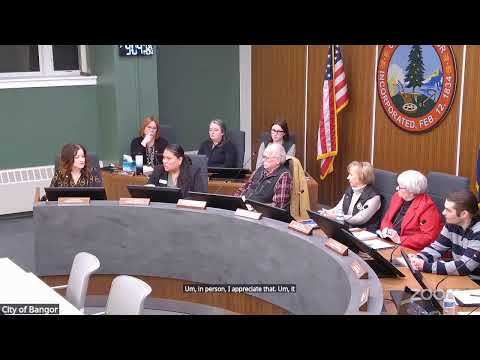
Bangor council creates standing committee on homelessness to craft strategy
Summary
The City Council voted unanimously to create a standing committee on homelessness to develop a data‑driven strategic response and recommend sustainable funding and regional coordination. The committee will include people with lived experience and subject-matter experts.
The Bangor City Council voted unanimously on March 23 to create a standing committee on homelessness charged with producing a strategic, data‑driven plan and recommending funding strategies and regional coordination.
Order 26‑107 would establish a committee made up of experts, individuals with lived experience, partners from peer municipalities and community stakeholders, supported by city staff including the homeless response coordinator and representatives from public safety, public health and economic development.
Supporters at the council and in public comment said a dedicated, ongoing body is necessary to coordinate services, identify gaps, and recommend sustainable funding. Councilor Beck said the council had aimed to include lived experience in the committee and hoped applicants would reflect that goal; public commenters such as Scott Party urged the committee be small and capable of meeting weekly to respond quickly.
Others, like Richard Chaucer, argued for a larger membership to ensure broad representation, including workforce development and behavioral health voices. Council discussion focused on membership balance, meeting frequency and the committee’s initial charge to create a strategic plan.
The council approved the order (roll call nine yes, zero no). The committee’s initial work will include identifying regional gaps, recommending funding strategies and coordinating with city departments.
Why it matters: The committee institutionalizes a city-level response to homelessness, centralizing strategy, incorporating lived experience and positioning the city to pursue sustained funding and cross-jurisdictional solutions.
Next steps: City staff and council leadership will begin the appointment process, publicize openings and brief the council on timelines and deliverables.