Get Full Government Meeting Transcripts, Videos, & Alerts Forever!
Get email alerts on the Parks And Recreation topic
No spam. Unsubscribe anytime.
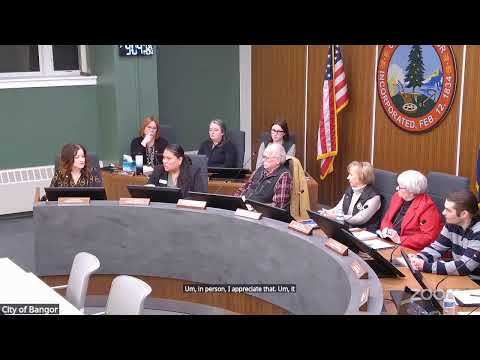
Bangor voters won’t be asked to approve $75 million parks and rec bond after council rejects measure
Summary
After hours of public testimony, the Bangor City Council voted down an order to authorize up to $75 million in general obligation bonds for a consolidated parks and recreation facility. Supporters cited aging infrastructure; opponents warned of tax increases and housing displacement.
The Bangor City Council voted down an order that would have authorized up to $75 million in general obligation bonds to finance a consolidated parks and recreation facility, ending a months‑long policy debate over the project’s scope, cost and funding.
The public hearing drew dozens of residents, coaches and business owners who gave both emotional and technical testimony. Gretchen Schaefer, who chaired the special committee studying the project, told the council the city’s existing facilities are “in desperate need of repairs” and that a modern, accessible building would serve residents of all ages. “Doing nothing isn’t free,” she said.
Several speakers described direct program benefits. Kimberly Boucher, a youth hockey coach and former Parks, Recreation and Harbor advisory committee member, said the proposal would expand year‑round ice and consolidate services that are now spread across aging buildings. “This is a smart and forward‑looking investment,” she said.
Opponents focused on the tax impact and potential harm to low‑income renters and older residents. Barbara Mann, a Bangor resident, said the projected tax increases threatened her ability to remain in her home after a recent property revaluation. “We’re pricing our renters out of our markets,” said Scott Party, who argued the city should scale back the plan and pursue alternatives including public‑private partnerships.
Several residents and council members urged a phased approach, stronger fundraising commitments and clearer estimates of operating costs. Jonathan Sprague, a former councilor, recommended narrowing the proposal and capping the city’s direct contribution to any regional ice facility to limit long‑term tax exposure.
Council debate centered on fiscal risk and whether the project had been scoped and funded appropriately. Councilor Beck said she supported the goals but wanted a revised funding stack that relies less on 100% bonding and more on partnerships and phased construction. Councilor Fish said she favored a smaller Phase 1 that would address immediate needs such as child care and ice, then expand as resources allow.
When councilors took the formal vote on order 26‑108, the roll call came back 0 yes, 9 no. A companion order to submit the question to the June 9, 2026 referendum likewise failed by roll call (0 yes, 9 no). Councilors said they would return quickly with revised options for the project and additional financial detail.
Why it matters: The vote leaves intact the city’s current, aging recreation infrastructure and pushes the council and project proponents back to the planning table. Supporters argued delaying will increase future costs; opponents said a better funding plan is required to protect taxpayers and renters.
Next steps: Councilors asked staff to rework the proposal, explore phased or smaller alternatives and pursue private‑sector partners and fundraising. The council did not adopt a revised plan during the March 23 meeting.