Get Full Government Meeting Transcripts, Videos, & Alerts Forever!
Get email alerts on the Personnel Policy topic
No spam. Unsubscribe anytime.
Burr Ridge trustees direct staff to pursue 0.00 BAC reasonable‑suspicion testing in personnel manual
Summary
Trustees voted 6–0 to amend the personnel manual to add language presuming a 0.00 blood‑alcohol concentration for reasonable‑suspicion tests and to direct staff to negotiate matching contract language with unions; village attorney warned about collective‑bargaining and federal DOT standards.
Burr Ridge trustees voted unanimously May 12 to adopt an amendment to the village personnel manual that directs staff to pursue language reflecting a 0.00 blood‑alcohol concentration (BAC) presumption for reasonable‑suspicion testing and to seek that standard in future contract negotiations.
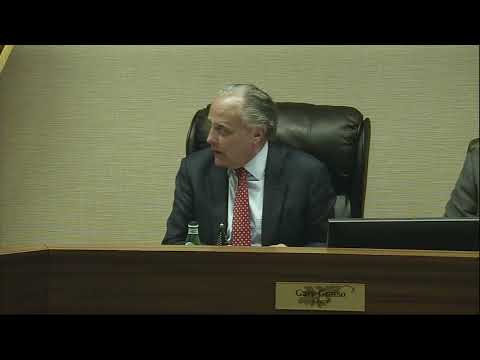
Trustee Guy Frances moved to add the 0.00 standard to the reasonable‑suspicion testing language and to instruct staff to negotiate corresponding contract changes; the motion passed on a 6–0 roll call with Trustees Frances, Matau, Smith, Skiappa, Paveza and Snider voting yes.
Village attorney Mike Durkin told the board that municipalities can set standards by local ordinance or policy but noted possible constraints tied to collective‑bargaining agreements and long‑standing federal guidance. "The federal Department of Transportation has for decades set 0.02 for operators of vehicles that require a CDL," Durkin said, adding that some contract language references DOT standards. He also said a presumption at 0.01 would be unlikely to indicate impairment and that the board could pursue 0.00 as a policy while negotiating contracts.
Trustee Anita Matal said the board previously sought a 0.00 threshold to align with private‑sector norms and emphasized pursuing uniform language across bargaining units. Frances and other trustees expressed support for directing staff to include a presumptive 0.00 standard in future negotiations while acknowledging legal and contract limits.
The ordinance amendment was approved as a personnel‑manual change with the board’s directive to staff to seek the 0.00 language during collective‑bargaining and other contract updates. The action does not itself amend existing union contracts; Durkin advised that the practical enforcement of a 0.00 standard may depend on negotiations and applicable law.
Next steps: staff will draft formal wording for the personnel manual and begin negotiations where necessary; the village will return with updated contract language or recommended ordinance text if and when negotiations permit.