Get Full Government Meeting Transcripts, Videos, & Alerts Forever!
Get email alerts on the Charter Renewal topic
No spam. Unsubscribe anytime.
LAUSD board denies renewal for Lock College Preparatory Academy after heated debate
Summary
After hours of testimony from Lock supporters and district analysts, the Los Angeles Unified School District Board voted 4–3 on March 10, 2026, to deny renewal of Lock College Preparatory Academy’s charter, citing resident‑school comparisons and benchmark shortfalls; board members who opposed denial cited student growth evidence and community impact.
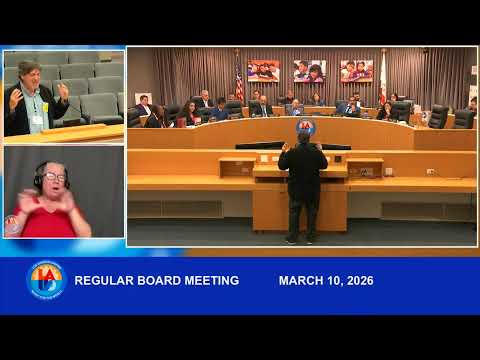
The Los Angeles Unified School District Board on March 10, 2026, voted 4–3 to deny the renewal petition for Lock College Preparatory Academy, a Green Dot conversion school in Watts, after an extended public hearing and debate.
Supporters filled the board chamber and submitted data showing large gains in student growth and graduation rates at Lock. Green Dot presenters told the board Lock’s graduation rate climbed to about 72% and presented third‑party growth measures they said put the school in the 73rd percentile for English growth and the 86th percentile for math growth. “Growth like this is in the best interest of students,” said Dr. Christina De Jesus, CEO of Green Dot Public Schools, during the school’s presentation.
The district’s charter schools division recommended denial based on the board’s renewal policy and the California dashboard, which compared Lock’s overall status and performance to its resident schools. Charter division staff told the board their three‑year analysis showed Lock lagged resident medians in some status measures and that an assigned benchmark (four‑year graduation cohort reporting) had not been met. Jose, the division director, noted the district’s responsibility to apply consistent renewal criteria and said staff stood by their recommendation.
Board Member Tanya Ortiz Franklin moved an amendment urging the board to weigh student growth and “best interest of pupils” rather than status measures alone. Ortiz Franklin argued the verified data and third‑party analyses the school presented showed sufficient progress and that denying renewal would destabilize a large community school that serves many high‑need students. “We should be looking at academic growth…our own goals are about distance from standard, not overall proficiency,” she said.
The amendment failed. The board then voted 4–3 to deny renewal (yes: Newell, Rivas, Grigo, Schmelson; no: Melvinne, Gomez, Ortiz Franklin). Student board member Yang cast a nonbinding advisory abstention. Board staff said the board has discretion under state law and could weigh growth evidence differently, and that a denied petition could be appealed to the Los Angeles County Office of Education; staff also said they would prepare contingency planning should the district need to assume operations.
What happened next: Green Dot leaders said they will pursue their legal options and appeal to the county and, if necessary, state oversight. District staff said they would begin parallel planning in case the appeal fails so student placements, facilities and services are not interrupted.
Why it matters: Lock serves a large population of English learners, students with disabilities and socioeconomically disadvantaged students. The vote tests how LAUSD will use new charter renewal rules under AB1505 — whether emphasis is placed on status (dashboard proficiency) or student growth and context — and signals how the board will weigh community stability against formal performance measures.
Who to watch: Green Dot Public Schools, LAUSD’s Charter Schools Division, advocates for conversion charters, and the Los Angeles County Office of Education, which will hear any appeal. The board’s decision may also influence how other conversion charters are treated under evolving state guidance.
Next steps: The petitioners have statutory appeal rights. If the board’s denial is appealed to the county and the county upholds the denial, the district said it would coordinate a transition plan; if the county or state approves renewal, the school would remain on campus under its charter operator.