Get Full Government Meeting Transcripts, Videos, & Alerts Forever!
Get email alerts on the Save America Act topic
No spam. Unsubscribe anytime.
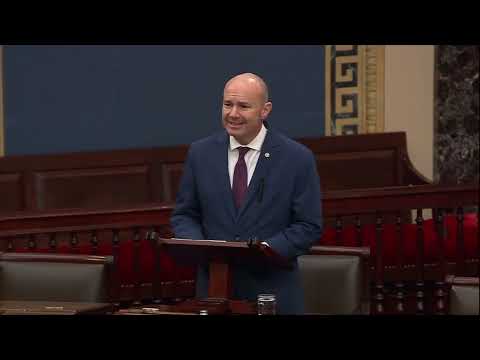
Senator urges passage of Save America Act to verify voter citizenship and restore confidence in federal elections
Summary
On the Senate floor a lawmaker argued the Save America Act would close verification gaps left by a 2013 Supreme Court interpretation of the NVRA, enable federal–state data cooperation, and include affidavits and fail-safes to avoid disenfranchising eligible voters.
A lawmaker on the Senate floor urged colleagues to pass the Save America Act, saying the bill is needed to strengthen verification of voter citizenship and protect the legitimacy of federal elections. The speaker framed the measure as correcting what they described as a statutory gap left by the Supreme Court’s 2013 decision in Arizona v. Inter Tribal Council and by long-standing DMV registration practices.
The lawmaker said the National Voter Registration Act of 1993 (NVRA, the "Motor Voter" law) created DMV-based registration that relies on self-attestation and that the Supreme Court’s Arizona decision prevented states from requiring documentary proof of citizenship on NVRA forms. "A prohibition without a reliable verification process is an incomplete safeguard," the lawmaker said, adding that the bill "would close that gap by strengthening verification mechanisms, encouraging consistent cooperation, and ensuring that federal election rules are backed by enforceable processes, not just assumptions." (The speaker attributed numbers to the record when noting the size of the non-citizen population and other statistics.)
Why it matters: the speaker argued that elections are the foundation of popular sovereignty and that any erosion of confidence in who is eligible to vote undermines the whole constitutional order. The lawmaker repeatedly told colleagues the proposal balances two principles the speaker summarized as: "make it easy to vote and hard to cheat." To support that balance, the bill as described on the floor would (per the speaker) expand verification pathways, permit state–federal data-sharing agreements where legally appropriate, and preserve an affidavit-based fail-safe so citizens who lack documentary evidence of citizenship can still register and be verified by election officials.
The speaker addressed a series of common objections. On concerns that the measure would disenfranchise citizens, the lawmaker said the bill explicitly allows affidavits and other procedures to prevent unlawful denial of registration. On privacy and centralized data use, the lawmaker noted that the federal government already holds records that can establish citizenship (citing the Department of Homeland Security’s SAVE system) and said the bill would use existing federal information to check eligibility when states agree to cooperate. On fears of partisan advantage, the speaker said the proposal is "party agnostic" and framed it as protecting every citizen’s vote regardless of party.
Claims and evidence on the floor: the lawmaker cited the NVRA, the Supreme Court decision Arizona v. Inter Tribal Council of Arizona, and a Brennan Center survey to frame arguments and counterclaims. The speaker characterized critics who argued the bill would disenfranchise millions as incorrect, pointing to bill provisions permitting sworn affidavits and a burden-shifting verification process by state election officials. The lawmaker also said private rights of action for election violations already exist in federal law and that extending enforcement tools to the bill’s new requirements was necessary to prevent the statute from becoming unenforceable.
What the speech does not resolve: the transcript records the lawmaker’s assertions and characterizations of how many non-citizens are present and of states’ actions on driver’s licenses and MOUs. Those numeric claims and characterizations are reported here as the speaker presented them on the floor; the speech transcript does not provide independent documentary evidence in support of the specific counts or of each state’s practices beyond the speaker’s statements.
The Senate debate on the bill was ongoing at the close of the speech; the speaker said they will "continue to come back here day after day, week after week" to press for passage. No vote outcome is recorded in the provided transcript.