Get Full Government Meeting Transcripts, Videos, & Alerts Forever!
Get email alerts on the Budget topic
No spam. Unsubscribe anytime.
Prior Lake-Savage Area Schools unveils proposed 2026–27 budget with more than $4 million in reductions
Summary
District staff proposed more than $4 million in reductions for the 2026–27 budget, including elementary consolidations, staffing trims and contingency adjustments; officials said shifting enrollment — especially kindergarten counts — and potential state changes to compensatory aid are driving the cuts.
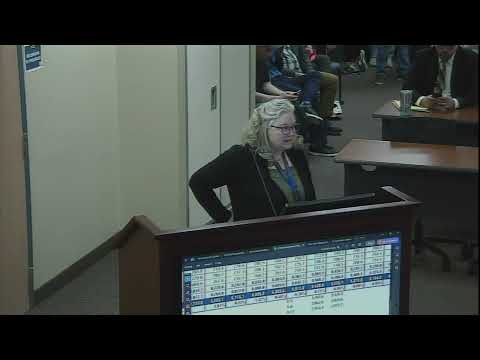
PRIOR LAKE-SAVAGE AREA SCHOOLS — District staff presented a proposed 2026–27 budget that would require more than $4 million in reductions and a series of staffing changes across elementary, middle and high schools.
The district framed the cuts around declining enrollment and funding uncertainty, saying administrators have met with building principals to identify adjustments that protect classroom impact where possible. “We are in a really challenging situation where we are having to make some really tough decisions,” a district presenter said at the start of the study session.
Director Ryder, who led the enrollment portion of the presentation, said the most immediate revenue risk is kindergarten. “That kindergarten number technically still is the 529. However, I’m accounting for possibly 40 less, just in case,” Ryder said, noting the district has provisionally removed 40 students from kindergarten projections to avoid overstating revenues.
Why it matters: the district’s funding is driven by average daily membership (ADM), a separate calculation from headcount. Officials said K–5 headcounts are close to prior projections but secondary ADM can differ because students sometimes leave midyear. Those differences matter because state revenue formulas use ADM for per-pupil funding.
What’s in the plan: the staff presentation organized recommendations into six buckets, including elementary site consolidation and repurposing of Westwood, middle- and high-school staffing adjustments, athletics and activities changes, district-service-center (DSC) realignments and a contingency for last-minute revenue or need. The elementary bucket shown to the board totaled about $1.69 million in proposed reductions, largely tied to aligning sections to board target class sizes and the Westwood repurposing.
Budget math and clarifications: staff said personnel savings figures include benefits and that the recommended FTE reductions do not translate one-for-one to laid-off individuals because HR must resolve seniority and contract placement. The presentation listed some net revenue adjustments — for example, a net addition to revenue of $203,502 tied to special-education aid and other recalculations — and flagged a possible compensatory-aid decrease of about $161,834 under current task-force scenarios.
Board reaction and next steps: board members pressed staff for more granular data on headcount versus FTE, the composition of administrative staff, and whether additional central-office efficiencies could reduce classroom impacts. Administrators emphasized the process: the list is a recommendation and personnel actions will be brought to the board for approval on April 13 (as presented).
State funding risk: administrators also summarized a MASBO-led task force and outreach from the Minnesota Department of Education that could change how compensatory aid is calculated, making some districts’ compensatory revenue more dependent on county direct-certification processes. Staff described a survey request from MASBO and said they have asked the state for a hold-harmless continuation for 2027 while the task force completes its work.
What the district will do: staff said they will continue monitoring kindergarten enrollment, rerun state revenue projections as models are updated, and return to the board with finalized personnel recommendations. No formal board votes occurred during the study session.
The study session paused for a short break before discussion of the single federal audit report.