Get Full Government Meeting Transcripts, Videos, & Alerts Forever!
Get email alerts on the Budget topic
No spam. Unsubscribe anytime.
Board previews tighter budget guard rails and right‑sizing as student needs rise
Summary
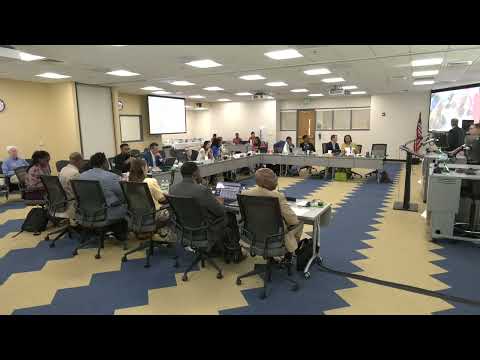
At a retreat session on budgeting, district leaders proposed clearer guard rails, decision criteria and process changes to reduce reliance on one‑time fixes, reassign non‑departmental spending, and link investments to measurable returns; trustees pressed for clarity on baseline services vs funded enhancements.
District finance and executive staff presented a retooled budget approach designed to give the board clearer choices ahead of the April–June budget cycle. Administration framed the work around three aims: confirm budget guard rails, set a decision lens for managers, and present invest/vs‑reduce packages so trustees can weigh trade‑offs against projected revenue.
Staff said the board will see expenditure packages in April, revenue and forecast scenarios in May and final adoption in June. The district’s consulting partners (named in the meeting as Alvarez and Marcal) are supporting a push to align requests more closely with expected expenditures, to plan capital purchases rather than rely on ad‑hoc vacancy savings, and to reassign previously “non‑departmental” costs into accountable department budgets.
Finance leaders urged trustees to reduce reliance on one‑time workarounds such as recurring vacancy savings and to demand clearer ROI evidence for new academic investments. The presentation listed common baseline and mandatory costs (salary step increases, retirement and health contributions, utilities and contract escalation) that drive year‑over‑year budget growth and are difficult for the district to control.
Officials provided concrete examples of recent cost drivers: last year’s TRS (teacher retirement) increase, health insurance increases and personnel step adjustments were presented as major baseline items; staff also said a recent accounts‑payable review and benefits reconciliation recovered roughly $6 million in overpayments to the state.
Trustees pressed for a public, plain‑language illustration of what the district receives from the state versus what local dollars buy — "the color of money" — so the community can see what baseline services (the board considers core) are funded locally versus by federal or state grants. Several board members said they want to prioritize high‑yield, high‑impact investments even if they require additional local resources; others stressed the need to constrain growth and reduce low‑value spending.
On facilities and right‑sizing, trustees discussed underutilized campus footprints and the long‑term savings that consolidation might yield, but staff cautioned that repurposing space is complex (utility and staffing implications, community use trade‑offs) and typically requires multi‑year planning and updated facility condition assessments.
Administration and chiefs described a more rigorous internal process for preparing budget packages this year: departmental leaders submitted detailed, justified requests; the cabinet reviewed them together; and consultants iterated with departments to improve accuracy. Staff said the stricter process will make it easier to identify true discretionary trade‑offs in May.
No formal budget actions were taken at the retreat. Staff committed to provide clearer baseline definitions, the April tactics package and a follow‑on financial workshop so trustees can see “if‑then” scenarios before any June decisions.