Get Full Government Meeting Transcripts, Videos, & Alerts Forever!
Get email alerts on the Strategic Plan topic
No spam. Unsubscribe anytime.
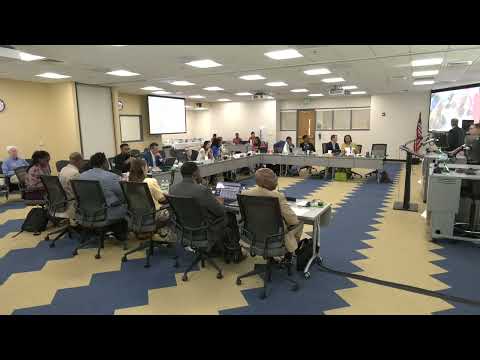
Savannah‑Chatham County leaders press for a clear “baseline” in draft five‑year strategic plan
Summary
At a district retreat, staff presented a draft five‑year strategic plan built on four pillars and heavy stakeholder input; trustees pressed administrators to define a concrete, consistent baseline student experience before tactics and budget investments are finalized.
Dr. Stacy Taylor told trustees the retreat was meant to refine — not finalize — a draft five‑year strategic plan and invited their feedback on concrete actions to make the vision operational. “This is not a final plan. However, it is a very strong draft and your feedback is critical in shaping what ultimately comes forward for your approval,” Taylor said.
The plan centers on four interconnected pillars — a high‑quality baseline instructional experience; talent attraction and development; trust, voice and partnerships; and enabling systems — and is guided by extensive stakeholder engagement. A presentation video and staff slides summarized engagement activity, noting thousands of contributions from staff, students, families and community participants.
Trustees focused the discussion on the plan’s most politically consequential question: what exactly will every child experience each day. Board members repeatedly asked for a short, usable definition of the “baseline experience” so the administration, principals and school leaders can move from broad priorities to consistent execution. Several trustees tied the request for definition to accountability: if a baseline is not clearly defined and agreed, the district cannot reliably measure whether schools are delivering it.
District leaders said the plan intentionally stops short of final tactics and that tactics — the specific programs, staffing models and budget trade‑offs that will deliver the baseline — are still being developed. Staff described a multi‑step rollout: year‑one emphasis on establishing clarity and early wins, year two on common ground and consistency, year three on scaling what works, and subsequent years on raising standards and embedding new practices.
Trustees and staff debated how to balance systemwide consistency with school‑level innovation. Several board members urged a clear “baseline as a floor” that all schools meet while preserving targeted freedom for principals to innovate once they reliably deliver that floor. School leaders and central staff said principal supervisors and common expectations will be key to ensuring both fidelity and innovation.
Mental‑health supports, tiered interventions for students not yet identified for special services, and talent development also drew sustained discussion. Trustees raised classroom‑level concerns — for example, teachers who report being physically injured by students with severe behavior — and asked how the strategic plan will change staffing, supports and protocols to improve both student outcomes and teacher retention.
Administrators said tactics, staffing proposals and associated costs will be presented to the board in April; the board will then weigh those proposals against the budget timeline in May and June. Trustees asked the administration to present the plan’s baseline in plain language so the public can understand what the district will guarantee to every student.
The retreat concluded with staff and trustees agreeing to continue refining the plan’s tactics and metrics before the district commits funding. Final decisions on funding and detailed tactics were left for subsequent meetings where budget and revenue forecasts will be brought together.