Get Full Government Meeting Transcripts, Videos, & Alerts Forever!
Get email alerts on the Wildfire Resilience topic
No spam. Unsubscribe anytime.
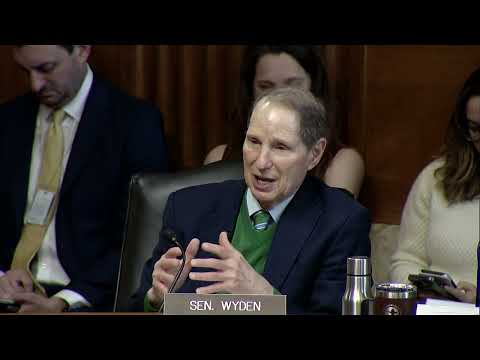
Sen. Wyden presses witnesses on Wildfire and the Grid Reliability Act, focusing on risks to rural utilities
Summary
Sen. Wyden told witnesses the Wildfire and the Grid Reliability Act aims to help rural communities facing drought, wildfires and rising energy costs; witnesses emphasized investing in wildfire resilience, transmission benefits and the funding challenges for small utilities.
Sen. Wyden questioned witnesses at a Senate Committee on Finance hearing about how the Wildfire and the Grid Reliability Act would help rural communities facing converging threats from drought, wildfire risk and rising energy costs.
Wyden said the U.S. power system in many places is "practically from the dark ages" and called the situation "a manufactured energy crisis," asking Dr. Reed how legislation he is introducing would address those risks. "This is a crisis we did not have to have," Wyden said.
Dr. Reed, a witness at the hearing, declined to offer specific views on the bill named by Wyden but spoke to the broader need for wildfire resilience and grid investments. "I don't have any specific thoughts on the bill you referred to in particular but I can speak to wildfire resilience and the importance of investing in wildfire resilience and investing in a grid that can be resilient to numerous concerns, including wildfires," Dr. Reed said. He warned that some resilience measures are "difficult to put on a ratepayer" because of the small footprints of rural utilities and suggested alternative mechanisms could be used to cover those costs.
When Wyden asked whether small utilities were being overwhelmed by current conditions, Dr. Reed answered that wildfires are an "incredibly important risk to be addressing" and stressed the role of transmission. "I also want to highlight the value that transmission can provide in wildfire mitigation, by being able to move power away from where areas are at extreme risk and route power in different ways so that consumers can still be served while the risk itself can be mitigated," he said.
Wyden framed the effort as a modernization task and invited other witnesses to speak only if they wished. Mr. Fisher, another witness, briefly agreed on the need for innovation and criticized the state of legacy technologies on the grid. "If we brought Thomas Edison back, he would recognize the technology," Fisher said, adding that some historic approaches are overly encumbered by patents and could impede modernization.
The hearing focused on broad questions of grid modernization, wildfire resilience and funding approaches rather than on a detailed markup of the bill. No formal motion, vote or amendment was recorded in the provided transcript.