Get Full Government Meeting Transcripts, Videos, & Alerts Forever!
Get email alerts on the Personnel Policies topic
No spam. Unsubscribe anytime.
Commissioners question comp‑time bank after HR and auditor flag legal and administrative hurdles
Summary
After reviewing payroll data and Fair Labor Standards Act constraints, Wichita County commissioners expressed concerns about recordkeeping, legal risk and administrative cost for a comp‑time bank; HR reported $24,045 in last‑year non‑law‑enforcement overtime, and the court did not adopt a new comp‑time bank policy at this meeting.
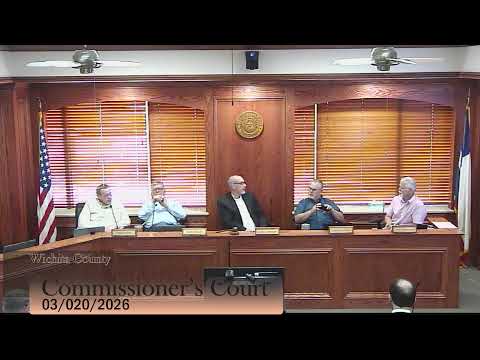
Wichita County commissioners on March 20 reviewed a proposal to create a comp‑time bank as an alternative to overtime for non‑law enforcement employees but did not adopt a policy after HR and the auditor highlighted federal limits, recordkeeping burdens and modest current overtime spending.
HR and auditor staff reviewed legal constraints under the Fair Labor Standards Act, noting employers who offer compensatory time for public employees face a complex set of recordkeeping requirements and potential accrual limits. As staff explained, some interpretations of federal guidance require careful documentation and may treat 240 hours as a maximum accrual in many circumstances.
Payroll context: HR reported the county paid $24,045 in non‑law‑enforcement overtime last year, a number several commissioners said was smaller than expected and that reduced the sense that a comp‑time bank would solve a major budget problem. “For all non‑law enforcement … we would be talking about was a total of $24,045 paid last year,” HR said during the meeting.
Practical concerns and management alternatives: Commissioners noted management techniques — using administrative time, scheduling to avoid overtime spikes, and modest overtime budget lines — as alternatives to a formal comp‑time bank. Several commissioners cited the complexity of tracking comp‑time use and payouts, and one warned of potential legal exposure and recordkeeping costs if the program were mis‑administered.
Outcome: The court asked staff to keep tracking overtime in departmental budgets, discuss options during upcoming budget meetings, and bring more information if commissioners want to pursue a formal comp‑time program in the future. No policy change was adopted on March 20.