Get Full Government Meeting Transcripts, Videos, & Alerts Forever!
Get email alerts on the Education Policy topic
No spam. Unsubscribe anytime.
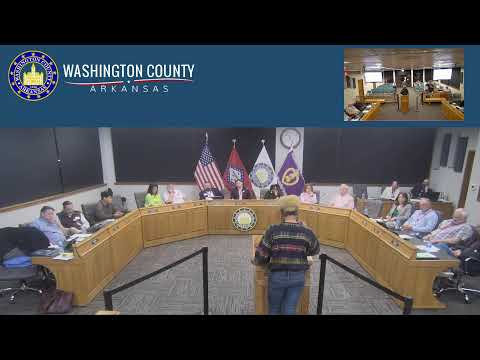
Quorum Court rejects 'good citizenship' resolution after heated debate and public testimony
Summary
After hours of debate and more than an hour of public comment, the Washington County Quorum Court voted down a nonbinding resolution urging 'responsible citizenship' among students; supporters cited safety, opponents said the court has no jurisdiction and the measure could chill student speech.
The Washington County Quorum Court debated and then rejected a nonbinding resolution urging “good citizenship” among youth in county schools after a lengthy exchange among justices and extensive public testimony.
The resolution, sponsored by Justice Wilson, called on school districts to review safety policies and to emphasize civic responsibility in curriculum. “Before one word of this resolution was written, I said the Quorum Court is not the boss of public schools,” Wilson told colleagues, adding he drafted the measure after student walkouts in early February and that his intent was to urge schools to ensure student safety and civic education.
Supporters framed the resolution as a public-safety and civics measure. “The thing is there was no protections. The authority that the school had was violated by the students,” Justice Fleming said during debate, arguing the court has a role in urging safety. Several justices said they were motivated by parental concerns and liability exposure for schools should a protest lead to injuries.
Opponents responded that the Quorum Court lacks legislative authority over school districts and warned the resolution could undermine students’ First Amendment rights. Justice Rivera Lopez said the language was vague and potentially punitive: “If we are trying to tell young people they can’t exercise their rights about certain things, that’s misguided,” she said. Justice Rio Stafford called the measure an overreach and stressed separation of powers: “We do not have jurisdiction over them,” she said of school boards.
Students, teachers and residents filled the public-comment period with differing accounts. Eliza Stewart, a Fayetteville High School sophomore who helped organize a walkout, said administrators and legal observers kept participants safe: “We felt safe during this walkout. Our teachers, the faculty, and the administration as well as legal observers…kept us safe,” she said. A student leader, Miller Ron, said the protest was organized and nonviolent and urged the court not to diminish students’ voices. Other residents described traffic and safety risks during the walkouts and asked the court to press schools to plan for safety.
After the debate and testimony, the clerk called the roll and the court voted; the presiding officer announced the resolution failed.
The meeting record shows the court later moved to remaining routine business and committee reports. The resolution was nonbinding and did not change school policy; several justices who opposed it emphasized they supported students’ constitutional rights even as they raised safety concerns.
The Quorum Court did not set a new date to revisit the topic; supporters and critics said further conversations with school boards and school administrators would be the appropriate next step.