Get Full Government Meeting Transcripts, Videos, & Alerts Forever!
Get email alerts on the Culvert Policy topic
No spam. Unsubscribe anytime.
Wichita County commissioners debate new culvert permit, set policy for next voting session
Summary
A proposed Wichita County culvert policy—requiring written permits, minimum technical standards and owner maintenance—drew detailed debate over dimensions, materials, enforcement and county installation; commissioners asked for revisions and expect the draft for action at next Friday's voting session.
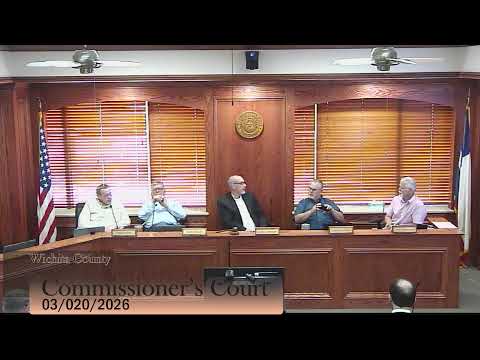
Wichita County commissioners on March 20 debated a proposed county policy that would require written permits and minimum technical standards for driveway culverts on county right‑of‑way, and directed staff to make clarifying edits before bringing the draft back for a vote next Friday.
The policy’s introducer told the court the measure is aimed at preventing improperly sized or installed culverts that can impair drainage, damage county roads and increase flood risk. “The purpose of this policy is straightforward. It would be to establish uniform, enforceable standards for driveway culverts installed within the county right‑of‑way,” the introducer said.
Why it matters: Commissioners said standardizing culvert installation and inspection could reduce road damage and downstream flooding, lower maintenance costs for county roads, and provide a clear permitting and enforcement mechanism where none exists today.
What the draft proposes: The document circulated to the court would require a written permit before any culvert is installed, replaced or modified in the county right‑of‑way; place ongoing maintenance responsibility on property owners; and set technical minimums (the draft lists an example 18‑inch minimum inside diameter and a 20‑foot minimum length). It also includes enforcement tools the drafter said are authorized under the Transportation Code, from warning letters to removal of non‑compliant installations at the owner’s expense and, where necessary, citation with fines.
Points of contention and requested changes: Commissioners raised multiple technical and policy questions. Several asked that the permit window be longer or permit extensions be authorized at the precinct commissioner level rather than an automatic 120‑day limit. Commissioners also asked that concrete and box culverts be explicitly allowed where conditions, heavy traffic or ditch geometry require them rather than limiting materials to pipe only. Safety near traffic control devices and property corners drew concern; one commissioner asked that the policy prohibit installations that interfere with stop signs or traffic control devices or require separate approval in such cases.
Installation and county assistance: The court debated whether the county should perform installations in specific instances (for emergency flood control, or for residents who are unable to hire a contractor) or require private contractors and bill the owner for actual county costs. Multiple commissioners favored a uniform approach across precincts and suggested the county retain authority to act in urgent flood‑control situations but prefer owners or private contractors handle routine installations.
Maintenance and inspection: Commissioners emphasized that requiring inspections before culverts are covered will prevent misaligned or improperly graded installations that trap sediment and mosquitos. The draft already places maintenance responsibility on property owners; commissioners asked that the policy clarify inspection procedures and the county’s role in helping owners meet grade and alignment requirements.
Enforcement, fees and next steps: The drafter said fees and installation charges will be set to reflect actual county costs; commissioners requested clearer fee language tied to cost and asked staff to return a revised draft with the agreed changes. The court scheduled the draft for action at the next Friday voting session but asked for the small technical edits and clearer enforcement/fee language beforehand.
What’s next: Staff will incorporate commissioner feedback — permit duration and extension process, explicit allowance for appropriate materials, clearer safety language near traffic devices, and fee wording tied to actual costs — and return the policy for the court’s consideration at its next voting session.