Get Full Government Meeting Transcripts, Videos, & Alerts Forever!
Get email alerts on the IWS Permit topic
No spam. Unsubscribe anytime.
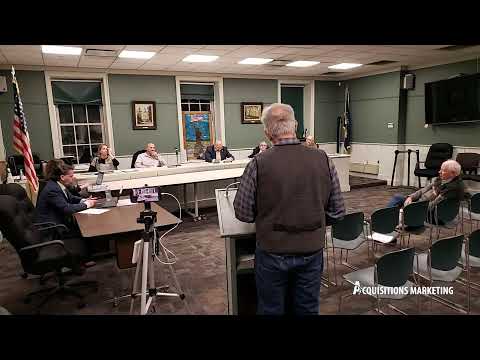
Goshen board defers IWS permit finding after questions about tipping fees, road impacts and DEC records
Summary
The Goshen Town Board tabled action on an IWS finding statement March 12 after staff said the traffic consultant was unavailable and members raised questions about a claimed $200,000 annual host payment, DEC permit tonnage and unpaid road impacts. Staff will seek clarifications and return to the board.
The Goshen Town Board on March 12 deferred action on the town’s finding statement for IWS’s special-use permit after members pressed staff and the applicant for clearer calculations of host payments, documentation of DEC permitting limits and evidence of past compliance.
Staff said the board could not act because the traffic consultant had not completed his review. Members asked staff to verify whether the host agreement and the Finding of Fact and Impact (FBI) were consistent: the signed host agreement calls for a $1-per-ton payment, while an analysis in the applicant’s materials repeatedly treats the town as receiving $200,000 per year. Board members’ back‑of‑the‑envelope math showed a realistic annual payment under the $1/ton term would fall roughly between $150,000 and $175,000 depending on tonnage and operating days; the board asked staff to request the applicant’s step‑by‑step calculation and to present corrected figures.
Members also requested that staff obtain DEC documentation showing permitted annual tonnage. Several trustees said they had seen references to a 600,000‑ton baseline plus 70,000 tons of recyclables but asked staff to get a definitive DEC permit record rather than rely on the applicant’s filings. Staff agreed to check DEC/EPA public violation databases (including EPA ECHO) to confirm statements in the draft finding about the facility’s violation history and to report back.
Board members pressed the applicant to address local road impacts along Hartley Road and the Parkland Road turning movement, noting existing erosion and pavement damage where heavy trucks turn. Staff and members said any developer contribution toward turning‑lane or intersection improvements should be calculated proportionally, based on the project’s share of peak‑hour traffic using that intersection. The board asked engineer John Canning to prepare a draft cost‑share calculation for the board’s review.
Because the planning major‑site plan approval process is separate and the applicant’s major site plan application must be refiled, trustees said the town retains leverage to require clarifications and plan corrections. The applicant was also asked to revise its site plan to show on‑site snow storage rather than relying on an adjacent lot.
No vote was taken. Staff said they will gather the traffic consultant’s analysis, the applicant’s tipping‑fee math, DEC permit documentation and any violation records and return the FBI to the board at a later meeting for possible acceptance and filing.