Get Full Government Meeting Transcripts, Videos, & Alerts Forever!
Get email alerts on the Local Government topic
No spam. Unsubscribe anytime.
Wisconsin Rapids council president Maline Palmquist outlines priorities: clearer procedures, roads, housing and small economic steps
Summary
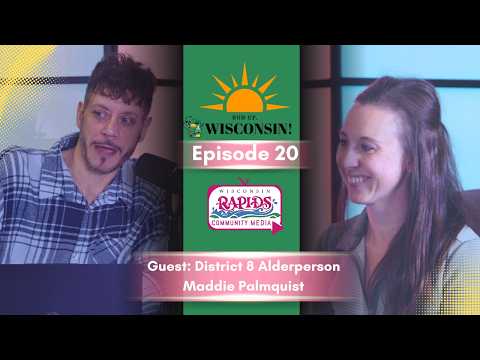
Maline Palmquist, current district 8 representative and common council president in Wisconsin Rapids, told Sunup Wisconsin hosts that she ran to make city processes clearer, wants written procedures, and favors incremental steps on roads, housing and business support.
Maline Palmquist, the district 8 representative and common council president for Wisconsin Rapids, told Sunup Wisconsin hosts James and Aaliyah that she ran for office to understand and clarify city processes and to give residents clearer answers about how decisions are made. “I am the current district 8 representative for the city of Wisconsin Rapids. I chair the public works committee and I am the current common council president,” Palmquist said.
Palmquist said local disputes and complaints prompted her candidacy. She described a pattern in which residents raise issues—such as the ATV/UTV debate—and elected officials must weigh trade-offs and consequences. She recounted an anecdote about a neighbor’s recycling complaint and said those everyday frustrations show why clearer rules and transparent procedures matter.
Explaining how the council works, Palmquist said committees handle more exploratory conversation and then bring recommended items to the full council for a final decision. “There are little committees, commissions, and boards that all report up to the council,” she said, noting one exception: the Police and Fire Commission, which she described as a standalone body where the city tries to put subject-matter experts.
On constituent concerns, Palmquist singled out roads and traffic. She said some roads in the city are maintained by outside authorities and that aldermen often request traffic studies from the engineering department to determine whether signage or intersection changes are warranted. “We can discuss how that would be impacted, what we need to do at the committee level, then make a decision at the committee level or keep talking about it,” she said.
If re-elected, Palmquist said she prefers incremental progress—“little steps to the big picture”—to attract tourism, support existing businesses, and address housing and infrastructure needs. She emphasized improving internal documentation for government processes so new officials and residents can follow why an item moved through certain committees. “Having written documentation so anyone can come in and say look this is how we take an item through a committee,” she told the hosts.
Palmquist also highlighted local education and workforce connections, mentioning Lincoln High School’s building construction program, which provides hands-on experience for students and recently built a house as part of the curriculum. Asked why voters should choose her, Palmquist responded bluntly and lightly: “Well, you have one option on the ballot, which is me.”
The interview closed with hosts thanking Palmquist; no formal actions or council votes were taken during the broadcast. The program emphasized the candidate’s focus on transparency, small but steady economic steps, and responsiveness to everyday resident concerns.