Get Full Government Meeting Transcripts, Videos, & Alerts Forever!
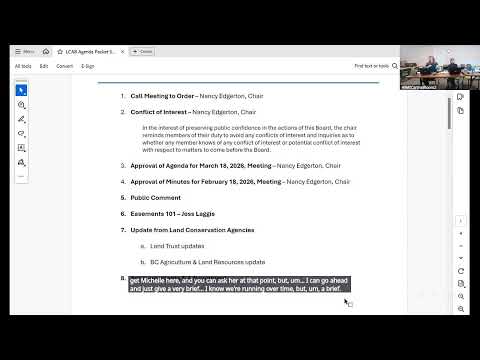
SAHC’s Jess Laggis briefs Buncombe County on conservation easements, funding and long due-diligence process
Summary
Jess Laggis of the Southern Appalachian Highlands Conservancy explained how conservation easements work, funding options (federal NRCS, state NCDA, private donors), the multi-year due-diligence required for perpetual easements, and stewardship responsibilities. County and partner updates followed.
Jess Laggis, who leads farmland-protection work at the Southern Appalachian Highlands Conservancy, told Buncombe County meeting participants that conservation easements are voluntary, recorded deed restrictions that permanently limit subdivision and development rights while leaving ownership with the landowner.
"A conservation easement is a voluntary legal agreement. It goes on record at the county register of deeds," Laggis said, explaining that easements are typically perpetual for her nonprofit and that easements can preserve habitat, water quality and working farmland.
Laggis walked the group through how easement value is calculated: appraisers establish a "before" (fee-simple) and "after" value, and the easement value is the difference. She summarized common funding mixes and what landowners can expect: federal NRCS agricultural easement programs…
Already have an account? Log in
Subscribe to keep reading
Unlock the rest of this article — and every article on Citizen Portal.
- Unlimited articles
- AI-powered breakdowns of topics, speakers, decisions, and budgets
- Instant alerts when your location has a new meeting
- Follow topics and more locations
- 1,000 AI Insights / month, plus AI Chat