Get Full Government Meeting Transcripts, Videos, & Alerts Forever!
Get email alerts on the Enrollment Management topic
No spam. Unsubscribe anytime.
Enrollment management reports surge in confirmed deposits; portal and dashboard tools credited
Summary
TSU enrollment managers reported 1,610 confirmed first‑time student deposits (summer+fall) and an estimated combined funnel near 1,780 including transfers; officials highlighted a new applicant portal, a dashboard integrated with Slate and multiple yield initiatives to convert deposits into enrolled students.
Doctor Eric Seltz told the Student and Academic Affairs Committee on May 7 that recruitment and yield work across the region produced a substantial increase in confirmed deposits for fall 2026. "When you combine our fall and our summer first time freshmen who've paid deposits, that combines for 1,610 students," Doctor Eric Seltz said, and he told trustees that including transfer confirmations would bring the total funnel close to 1,780.
Seltz credited regional recruiting (Tigers on Tour), alumni and foundation volunteers, and a new applicant portal that provides a taskbar, scholarship and financial‑aid visibility and an events calendar to help admitted students complete enrollment steps. He also described a dashboard developed with Alvarez and Marsal that integrates with Slate to track applicant cohorts, scholarship confirmations (the Metro Nashville Trailblazer shows a roughly 35–36% confirmation rate) and other yield metrics.
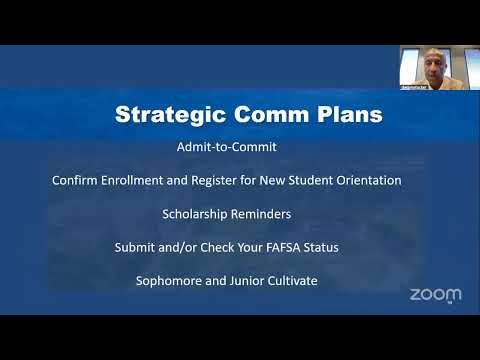
Trustees asked whether confirmed students will be full time; Seltz said most confirmed students are scholarship recipients and that roughly 80% of the confirmed cohort are expected to enroll in 15 credit hours to meet scholarship requirements. He also reported that about 85% of confirmed/registered students had submitted FAFSA and that financial‑aid communications and a digital brochure are being deployed to reduce nonpayment dropoffs.
Seltz said the university is continuing outreach (postcards, phone and counselor contact) and planning orientation sessions in June and July; he urged continued FAFSA outreach to preserve the incoming cohort.