Get Full Government Meeting Transcripts, Videos, & Alerts Forever!
Get email alerts on the School Bond topic
No spam. Unsubscribe anytime.
Hollis voters reject $19.4 million bond to expand Hollis Primary School
Summary
Voters defeated Article 1, a $19,384,375 bond to renovate and add to Hollis Primary School; supporters cited overcrowding and safety problems while opponents urged alternatives and warned of generational tax burdens. Bond failed 285–590 (needed 525).
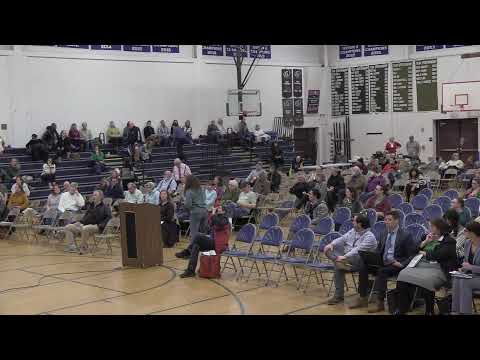
Voters at the Hollis School District annual meeting on the warned bond question (Article 1) rejected a $19,384,375 bond to finance design, demolition, construction and equipping of renovations and additions to Hollis Primary School. The moderator announced the ballot result: 285 yes, 590 no; three-fifths (525) were required for approval, so the article failed.
School board presenters laid out the case for the project as a response to longstanding space and safety constraints. Ann Wake Pasqual, presenting the school’s findings and designs, said the building “is just busting at the seams and we have nowhere else to go,” describing lost library space, preschool classrooms moved into hallways, and constrained special‑education and nursing areas that staff say limit services.
Board materials and presenters emphasized safety and traffic concerns around Route 122, the need for updated secure entrances and a functional fire lane, and the plan’s aim to create dedicated art, music and multi‑purpose spaces. The presentation also highlighted attempts to constrain costs and preserve recent investments: “we have taken pains to ensure that this is a tasteful design keeping with the character of the town,” a presenter said, noting reuse of recent HVAC and solar work where possible.
Opponents urged a slower, more measured approach. Several residents argued the scope had grown far beyond an initial three‑classroom request to a nearly 40% increase in square footage and tens of millions in lifetime cost, and pressed for alternatives including reuse or study of the town‑owned Farley building, formation of a dedicated building committee with technical experts, or targeted renovations. Liz Barber, a resident speaker, asked that the project be sent back for a building committee review, saying the enrollment committee “has expanded their scope of work far outside the task of studying enrollment.”
The defeat of the bond means the district will continue to operate within existing space constraints; presenters said that outcome would likely force larger class sizes, further repurposing or loss of specialist program space, and a return to voters if a new plan is developed. The board and administration indicated they would continue planning and noted some items—such as septic work—remain necessary regardless of bond approval and would need to be addressed in future proposals or budget items.