Get Full Government Meeting Transcripts, Videos, & Alerts Forever!
Get email alerts on the Housing Policy topic
No spam. Unsubscribe anytime.
City attorney briefs commission on 2025 housing laws, CEQA exemptions and overlay‑zone court ruling
Summary
The city attorney told the Planning Commission about recent 2025 changes to the Housing Accountability Act, CEQA statutory exemptions for certain multifamily projects, subdivision‑map act changes and a court ruling on overlay zones that could affect housing‑element strategies statewide; staff advised most of the new tools do not apply directly to Calabasas today.
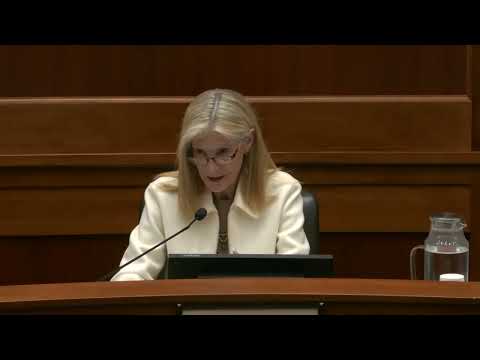
The Calabasas Planning Commission received a detailed legal briefing on Nov. 20 about a wave of 2025 state housing laws and a recent court ruling that may alter common planning tools.
The city attorney (who presented the material) outlined several changes: amendments to the Housing Accountability Act (HAA) that narrow the grounds for denying qualifying housing projects and expand enforcement remedies; updates to CEQA that create a new statutory exemption for many multifamily projects in urban areas (including larger maximum site sizes and a defined tribal consultation process); ministerial‑approval pathways for small urban subdivisions under the Subdivision Map Act (limited by very‑high fire‑hazard zones); and SB 79, which facilitates ministerial approvals near certain transit stations (not applicable to Calabasas because the city has no qualifying tier‑1 or tier‑2 stations).
Key legal points: the attorney said the HAA now imposes strict timeframes and evidentiary requirements — for example, a city must identify inconsistencies within 30 days after application completeness and may disapprove only if a project will cause a specific adverse impact that cannot be feasibly mitigated. "The legislature stated that it expects that there will be few circumstances where a city will be able to find a specific adverse impact," the attorney said. The briefing also described revisions to the 'builder's‑remedy' rules (new density guardrails and a limit on permitted density increases) and explained that HCD can seek decertification of a housing element, which could expose a jurisdiction to builder's‑remedy projects.
On CEQA, the attorney summarized a new statutory exemption (Public Resources Code section referenced in the meeting) that can exempt qualifying housing developments — sometimes quite large — from CEQA if they meet density, urban‑area and other conditions. The exemption includes a special, expedited tribal consultation process that may require mitigation measures for tribal cultural resources and narrows the time a jurisdiction has to act after consultation concludes.
Overlay‑zone court ruling: the attorney briefed commissioners on a recent court decision (Commune DTLA v. City of Redondo Beach) that found certain overlay zones used to satisfy housing‑element site requirements may be invalid when the underlying zoning does not actually entitle residential uses at the required densities. He said Calabasas’s overlay approach differs (the city’s underlying zone already provided residential entitlements in key places) and that Calabasas was not directly affected by that ruling, but the decision unsettles statewide practice and is on appeal.
What commissioners asked for: maps and data showing the local housing stock (owner‑occupied vs. rental), easements and oil/gas infrastructure, and an accessible summary of implications for projects that may come before the commission. Staff said much of the baseline data appears in the city’s 2021 housing‑element background and agreed to provide targeted maps and pointers where feasible.
The briefing aimed to help commissioners anticipate how revised state laws and case law will constrain discretionary review, shorten timelines and increase the legal risk of denying qualifying housing projects.