Get Full Government Meeting Transcripts, Videos, & Alerts Forever!
Get email alerts on the Warrantless Arrests Prosecutor Contact topic
No spam. Unsubscribe anytime.
State's attorney and public-safety official say H. 744 largely codifies current practice on prosecutor contact for warrantless arrests
Summary
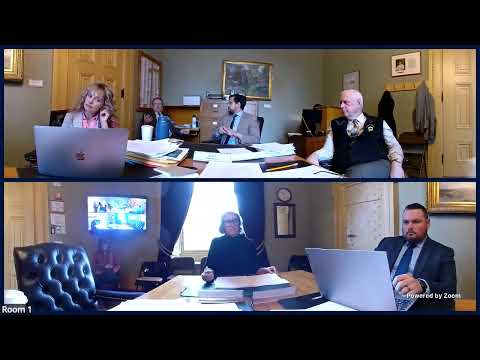
At an April 3 Senate Judiciary hearing on H. 744, Tim McManus of the Department of State's Attorney and Tucker Jones of the Department of Public Safety told the committee the bill largely reiterates present practice and cautioned against mandating prosecutor calls for every after-hours warrantless arrest.
On April 3, the Senate Judiciary committee took up H. 744, a bill addressing when judges and law enforcement must involve prosecutors in warrantless-arrest procedures. Tim McManus, identifying himself for the record as 'Tim McManus, Department of State's Attorney,' told the committee his office is neutral on the bill as written and described the measure as largely restating existing practice.
Why it matters: The core dispute centers on whether statutory language should require ('shall') or permit ('may') prosecutor involvement before a judge is contacted after hours. Advocates for allowing judicial discretion said requiring prosecutor calls for every after-hours warrantless arrest could create operational burdens for smaller counties and would necessitate clear resourcing and training for law enforcement.
McManus said his office 'does not have an objection to it and we don't necessarily support it. We don't think it's needed per se,' adding that the language, as described by Representative LaLan, 'basically reiterates current practice that a judge may...' He said the Criminal Rules Committee had at one point proposed mandatory ('shall') language, which the department strongly objected to because it would have required 'multiple phone calls' to prosecutors for every such arrest.
McManus cited practical concerns for smaller counties, where fewer attorneys share on-call duties and home calls can be frequent during holidays or busy periods. The transcript contains inconsistent figures when describing on-call pay; McManus referenced both '$50' and '$20' as the on-call compensation in different lines of his testimony. The committee discussion noted that mandatory calls could be 'very onerous' in jurisdictions with limited staffing.
Committee members pressed for operational detail on how on-call systems function. McManus said practices vary: larger counties rotate duties among many attorneys, while smaller counties may have one attorney effectively on call for extended stretches.
The testimony also addressed the interaction with the court rules process. Committee members and witnesses noted that the Rules Committee is separately considering similar language and could adopt or change court rules on a different timeline. The bill sets an effective date intended to preserve current practice while the Rules Committee completes its review; testimony cited possible dates including July 1, Jan. 1, and the bill's July 2 effective date.
Tucker Jones of the Department of Public Safety said he 'had not much really more to add' beyond McManus's remarks and that if H. 744 'merely codifies what is existing practice, then there isn't much more to add here.' He added that if the bill were to change practice, law enforcement would need notice and training so agencies could 'be up to speed on what the expectation is.'
No formal motion or vote on H. 744 was recorded during the session. Committee members and staff discussed follow-up steps, including additional questions for witnesses and scheduling further testimony.
Next steps: The committee indicated it may revisit the bill at a subsequent meeting and will consider input from the Rules Committee, which is reviewing related court-rule language. The hearing closed with staff arranging follow-up and scheduling details.