Get Full Government Meeting Transcripts, Videos, & Alerts Forever!
Get email alerts on the Housing Supply And Affordability topic
No spam. Unsubscribe anytime.
City of Champagne says 2% vacancy, needs roughly 7,000 new units in next decade
Summary
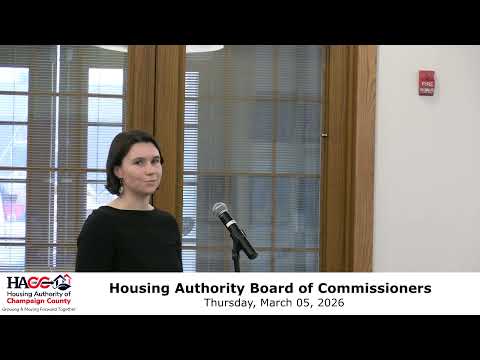
City of Champagne staff presented a housing needs analysis to the Champagne Housing Authority board on March 5, reporting a 2% vacancy rate and estimating a need for about 7,000 housing units over 10 years, with a pronounced shortage for lowest‑income households and rising rents (median about $1,400).
City of Champagne officials told the Champagne Housing Authority board on March 5 that the city’s housing market is deeply constrained and requires a sustained building effort to restore balance. “Two percent is our vacancy rate in Champagne,” Lauren Weber, a community development specialist with the city, told commissioners, adding that a healthy market would be closer to 5–7 percent.
The city’s analysis, prepared with RDG Planning and Design, estimates Champagne needs about 7,000 net new housing units over the next 10 years to accommodate projected population and household growth. Lauren Weber said the study uses population projections and American Community Survey data; staff estimate roughly 500 of those units will be needed for students and about 6,500 for the non‑student community.
Why it matters: a tight supply pushes rents higher and eliminates choices across the income spectrum. City presenters reported a median market‑rate rent around $1,400 (January data) and presented charts showing the largest unit shortfall among the lowest‑income households, with additional shortages in some higher income bands that increase competition for middle‑market units.
Presenters also described conditions affecting residents: reports of deferred maintenance, nonresponsive landlords and isolated reports of unexpected tenant fees (for example, internet charges bundled through a property contract). Those tenant‑experience problems, officials said, are compounded by the low vacancy rate and higher construction and insurance costs that deter development.
The city outlined four strategic goals to respond: increase housing supply; improve affordability and housing stability; raise housing quality and resilience; and build regional partnerships to deliver housing. Rob Kowalsski, director of neighborhood services, said staff are pursuing developer outreach, landlord surveys and additional public engagement. “We want a data‑driven understanding of our local housing needs and then propose strategies for how we can begin to address those needs,” he said.
Next steps: staff will continue neighborhood engagement and surveys (general public and landlords) and expect to return to city council in May with a final plan for approval.
What was not decided: the presentation described options and priorities but did not include new binding local ordinances or mandatory affordable set‑aside rules; presenters said Champagne currently has no such requirement. The city recommended a combination of supply increases across income bands and targeted programs for lowest‑income households but left policy choices — such as whether to pursue mandatory set‑asides — to elected officials.
Funding and program anchors mentioned in the presentation included existing voucher programs and possible partnerships with the housing authority; the staff said they are exploring how the city can make development more appealing to affordable housing builders.