Get Full Government Meeting Transcripts, Videos, & Alerts Forever!
Get email alerts on the Housing topic
No spam. Unsubscribe anytime.
Draper tops county median price; council members discuss housing strategy and state mandates
Summary
Draper officials on the city podcast responded to a Salt Lake County Realtors report showing a $990,000 median home price, discussed recent development agreements for smaller homes and townhomes, and warned that repeated state mandates are constraining local land-use authority.
Draper City officials used a city-produced podcast to weigh in after the Salt Lake County Board of Realtors placed Draper atop the county for median home price, saying the city’s median sits at about $990,000.
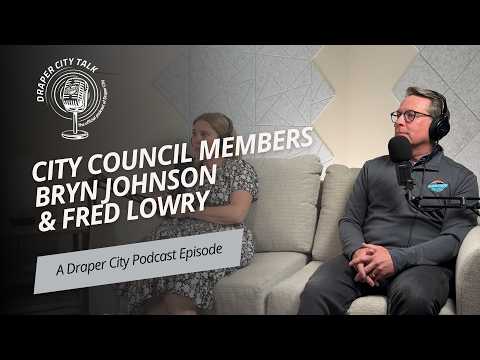
Mayor Troy Walker and Council Members Brenn Johnson and Fred Lowry said the figure is both a point of pride and a policy problem because high prices make it harder for younger families to buy in Draper. "We're not indifferent to that — it's frightening as a parent," Johnson said, describing efforts to add a broader mix of housing stock.
Council members said the City Council recently approved two development agreements that add smaller single-family homes, townhomes and condos to the supply; in one transit-area project the council required owner-occupancy to prevent investor buy-ups. "We required in that development agreement that all of those have to be owner occupied and owner purchased," Walker said, noting the requirement is intended to protect opportunities for local ownership.
They also framed the policy debate as part of a larger tension with the state legislature. Both council members described repeated state mandates and new laws that have limited local land-use discretion and forced cities to implement plans they did not choose. Lowry said negotiating required plans — for example, a recently negotiated station-area plan at Kimble's Lane — allowed the city to obtain a less intensive outcome than initially proposed, but he warned that continued preemption would remove local public hearings and reduce residents’ avenues for recourse.
On housing data and context: Walker noted a roughly 54% increase in local property values over the past six to eight years as discussed on the show; council members recalled a past bond used to purchase open space (one speaker estimated about $40 million, another said they "didn't think it was that much"), indicating some historical figures were approximated in the conversation.
Why it matters: High local home prices affect whether new households can form and the city’s ability to retain local workers. The council is attempting to expand smaller and ownership-focused housing while signaling to state lawmakers that Draper can plan responsibly at the local level.
Next steps: No formal ordinance or recorded vote was taken on the podcast. Council members described development agreements approved at a recent council meeting; the podcast did not provide motion text, vote tallies or ordinance numbers. For the precise terms, the city’s planning/meeting records should be consulted.