Get Full Government Meeting Transcripts, Videos, & Alerts Forever!
Get email alerts on the Community Outreach topic
No spam. Unsubscribe anytime.
Grass Valley Historical Commission welcomes new members and advances walking‑tour, plaque and outreach plans
Summary
The commission introduced two new commissioners, scheduled a working meeting to set priorities, and reviewed multiple plaque installations and a mobile ArcGIS walking tour that staff will send as a K–8 flyer to schools; commissioners noted limited local funding (about $1,500 in savings) and the need for city support.
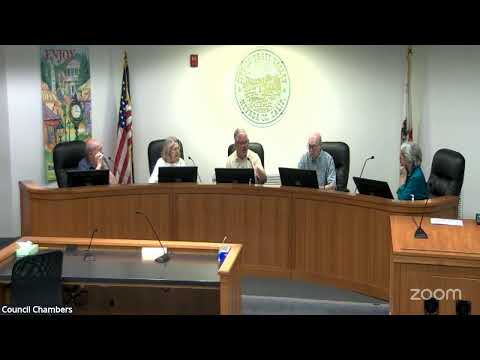
The Grass Valley Historical Commission used its meeting to introduce two new commissioners, discuss memorial and landmark plaque installations, and advance a self‑guided walking tour and History Day outreach to local schools. Commissioners agreed to hold a working meeting to set short‑term priorities and to visit two potential plaque sites at the next meeting.
Chair moved the meeting to an item introducing new members. Nancy (new commissioner) described long residency in Grass Valley and her background as a retired workforce‑development counselor and adjunct instructor; Randy (alternate commissioner) outlined five decades of construction experience and recent work restoring historic buildings. Mr. Seveli also introduced himself and summarized local family mining ties and prior public‑sector experience.
Commissioners reviewed three pending plaques: a Memorial Park plaque that can be mounted on a granite block or pedestal, a Mil Street plaque describing Judge Walsh and the old brewery, and a Firehouse plaque intended for the Main Street building. Staff identified Dwayne Strawer (community risk reduction manager) as the city staff contact to obtain a core sample for mounting and to coordinate site work. Commissioners noted that landmark designation approvals also involve the county historic commission and, where appropriate, the board of supervisors.
On outreach, Teresa described a History Day initiative and a K–8 flyer that the commission plans to distribute the week of the 9th to local schoolchildren; the commission discussed a list of roughly 15–18 sites (museums, churches, the powerhouse, the Firehouse Museum and others) to include in a mobile ArcGIS story map. Miranda, the city’s creative director assigned to the project, demonstrated the digital walking‑tour map and how photos and short descriptions will appear on mobile devices. Commissioners discussed collecting current color photos and crediting contributors (Mark Wy and Dakota were mentioned) and emphasized making the tour free and easy for families to use.
Commissioners raised funding constraints: one member said the commission currently has about $1,500 in savings and encouraged finding ways to earn revenue or secure a city budget allocation to mount plaques, print materials and support events. The commission set a working meeting (to be confirmed with staff) to meet as a group, review the mission and assign projects; they also agreed to a short site visit at the end of the next meeting to view potential plaque locations (Lake Olympia and a nearby railroad trestle). No formal votes or binding budget decisions were recorded.
What’s next: staff will follow up on scheduling the working meeting, confirming museum participation and continuing coordination with the county historic commission on landmark plaques. The commission expects additional details on the walking‑tour map and distribution plan in the next meeting packet.