Get Full Government Meeting Transcripts, Videos, & Alerts Forever!
Get email alerts on the Special Education topic
No spam. Unsubscribe anytime.
Lawmakers hear proposal for special‑needs early‑intervention charter as parents press for services
Summary
A bill to permit an early‑intervention and inclusive charter school for children with disabilities drew strong support from the charter council and senators, who said Guam lacks coordinated early services such as speech, occupational and physical therapy. Sponsors asked for a brief pause while organizers complete nonprofit filings; the council urged close coordination with DOE and health agencies.
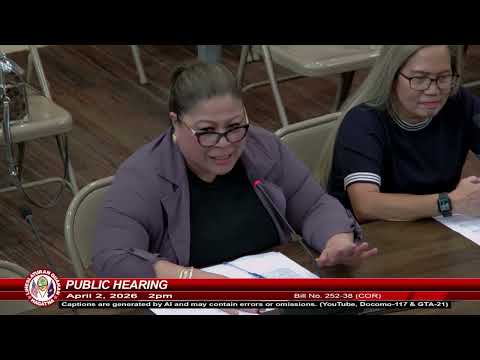
The committee heard testimony April 2 on bill 264‑38 COR, which would raise the charter cap to authorize an early‑intervention and inclusive charter serving children with disabilities.
Evangelene Mapeda, chair of the Guam Academy Charter Schools Council, said the council supports an inclusive‑education charter that provides early screening and specialized classroom design. "When they came to meet with us, they said there is a barrier for students that are from four years old to about fifth grade," Mapeda said, noting sponsors have special‑education expertise and asked for a temporary pause to finalize nonprofit and filing requirements.
Senator Sean Gumatau and others emphasized the scale of unmet therapy needs: Dr. Gumatau read a March 11 letter from the acting GDOE superintendent requesting the governor's emergency approval to procure speech‑language, occupational and physical therapy services. The letter — cited in the hearing — reported hundreds of students across GDOE who currently lack services and indicated charters and private schools also have unmet needs.
Witnesses and senators discussed how a focused charter could reduce fragmentation by centralizing early interventions, offering whole‑child programming and enabling coordinated therapy services. Mapeda and proponents described classroom design choices (sensory‑aware color schemes and small cohorts) and suggested the charter could also serve students from other charters who need specialized supports.
Committee members urged the sponsors to coordinate with DOE, public health and relevant agencies, and to consider how per‑pupil funding and workforce shortages (therapists and specialized staff) would be addressed. Proponents acknowledged those staffing and logistic challenges and said they are working on organizational, licensing and nonprofit requirements before returning for markup.
No committee vote was taken; the chair closed the hearing and invited additional written testimony. Senators signaled bipartisan support for addressing service gaps but asked staff to review statutory definitions and cross‑agency implementation issues during the committee process.