Get Full Government Meeting Transcripts, Videos, & Alerts Forever!
Get email alerts on the Safe Routes To School topic
No spam. Unsubscribe anytime.
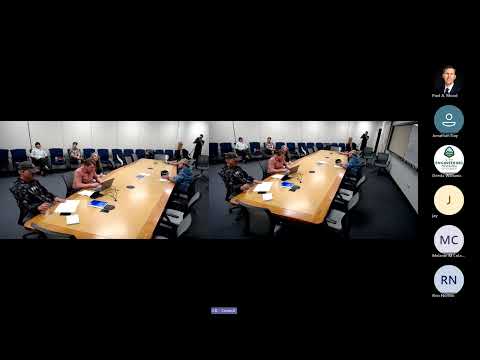
Haley Bishop presents Safe Routes to School findings; parents and staff press for crossings, transit access
Summary
An AmeriCorps intern presented Flagstaff City’s Safe Routes to School existing-conditions report showing roughly 61–62% of students are driven to school, and recommended low-cost education, sidewalk completion, crossing guards and transit passes; parents and Mountain Line staff urged closer coordination on crossings, signage and bus access.
Haley Bishop, an AmeriCorps intern and NAU geography student, presented an existing-conditions report on the Safe Routes to School program, telling the committee the student-tally survey shows about 61–62% of students are driven to school and that national research suggests Safe Routes efforts have reduced pedestrian and bicyclist injuries by roughly 23%.
"So, this is our existing conditions report that we had created by EECOM," Bishop said, outlining data on mode share, neighborhood walksheds and top parent concerns and recommendations. She told the committee that parents most frequently cited high vehicle speeds near schools, missing school signage and a lack of crossing guards as barriers to walking and biking.
The presentation listed school-specific recommendations: completing sidewalks and bike-lane networks where possible, adding crossing guards at priority intersections, promoting low-cost programs such as bike-and-walk-to-school days and park-and-walk programs, and piloting a Mountain Line Eco Pass for participating schools. Bishop described a proposed "toolkit" to train PE teachers on bike and pedestrian safety to increase student confidence when infrastructure is lacking.
Parent testimony at the meeting underscored those concerns. "My major complaint about schools in Flagstaff is that the schools are not located where the people live," said John Day, a parent, who described long transit trips and difficult transfers for families on the west side and urged better crossings and signage at charter schools.
Mountain Line staff told the committee the agency already provides travel-training and passes for FUSD students but noted data limitations. A Mountain Line representative said some student-tally forms were incomplete, skewing the data toward elementary schools and undercounting older students. The representative also explained that charter schools are not included in the FUSD Eco Pass system and that Eco Pass pricing is purchased per student; the presenter estimated per-student costs could run up to about $10 in large-group buys.
City staff and committee members discussed next steps for infrastructure-focused projects tied to the Safe Routes program, including targeted designs for northeast neighborhoods, Nolles/Sawa area work and the Butler Avenue complete-streets conversion that would relocate bike lanes to a raised parkway with protected intersections. Paul Mood, an engineer on the call, told the committee that public works received budget approval for a four‑person right-of-way crew starting July 1 to help with maintenance such as cinder cleanup and snow removal around new features.
The meeting record showed no formal motions or votes on Safe Routes measures. Staff said many recommendations will require multi-agency coordination (city, county, Mountain Line, FUSD and ADOT) and further design review; several items were flagged for additional presentation at a future meeting.
The committee closed public discussion and moved later in the agenda to Metro Plan’s regional project-mapping presentation. The Safe Routes discussion is expected to return for additional design review and grant-coordination work with partners.