Get Full Government Meeting Transcripts, Videos, & Alerts Forever!
Get email alerts on the Economic Development topic
No spam. Unsubscribe anytime.
Hamilton County considers 35‑year lease to convert former justice center into film and music campus
Summary
A developer and county staff presented a proposed 35‑year lease to convert the vacant Hamilton County Justice Center into Jailhouse Studios, with $375,000 annual rent, tenant‑funded renovations and commitments to local hiring and education pathways; commissioners asked about power, parking and clawbacks.
County commissioners heard a presentation on Resolution 326‑17 to authorize a lease of the former Hamilton County Justice Center at 601 Walnut Street to Jailhouse Properties LLC, which proposes to operate the site as Jailhouse Studios.
The county presenter summarized key lease terms: a 35‑year lease with options for five‑ or 10‑year renewals, an annual base rent of $375,000 with a 3% annual increase, required construction milestones that can trigger reversion if unmet, and use restrictions that prohibit activities inconsistent with zoning or illegal uses. The presenter said the tenant will pay for all renovations and utilities and that the lease includes remedies for default, including termination and repossession.
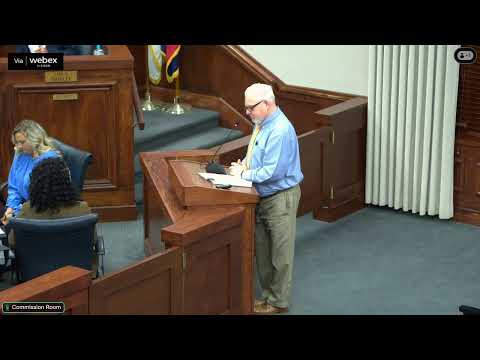
Jimmy White, who identified himself as president of Urban Story Ventures, told commissioners the project will pair production facilities with training and education programs for students. "We're not putting more power in there to service the data. I want to make that abundantly clear," White said when answering questions about power needs for the project's small data/server room. He characterized the project as an opportunity to keep local artists in Chattanooga, to create career pathways tied to area schools and to recruit film and music production work that he said could support many local jobs.
Commissioners pressed for specifics. One asked how many parking spaces the lease includes; staff answered the agreement covers 35 spaces on the top deck that are ‘‘almost always open.’’ Commissioners also questioned job‑count estimates and local contracting commitments; project representatives said they plan to use local contractors where possible and estimated total redevelopment costs in the neighborhood of $80–$100 million, with a substantial portion dedicated to production equipment.
The presentation emphasized protections for the county: milestones and clawback/remedy language in the lease, tenant responsibility for renovation costs, and insurance requirements intended to shield the county from liability. Commissioners and attendees also discussed labor arrangements and union participation; White said projects in this sector typically pay industry standard wages to attract crews.
No formal vote on the lease is recorded in the transcript. Commissioners and staff closed the discussion after questions and public testimonials praising the project's potential economic and educational benefits; the resolution was set to be taken up again at a later meeting for formal action.