Get Full Government Meeting Transcripts, Videos, & Alerts Forever!
Get email alerts on the Housing Policy topic
No spam. Unsubscribe anytime.
Cascade Council moves to develop residential incentives for workforce housing; TIF caveats noted
Summary
The council directed staff to draft a formal proposal for residential incentives exceeding $1,000 per home to support a potential subdivision, noting that TIF rebates require a 35.93% set-aside for low-to-moderate-income uses and rebates are limited to infrastructure costs.
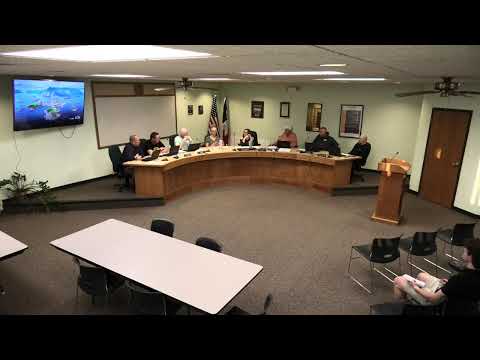
The Cascade City Council on March 9 authorized staff to prepare a formal proposal to offer residential incentives for a possible workforce housing subdivision, after discussion of financing options and administrative constraints.
A council speaker summarized an important limit on Tax Increment Financing (TIF): if the city uses TIF rebates for residential incentives, 35.93% of the TIF dollars must be set aside for low-to-moderate-income (LMI) purposes and remain in the city for uses such as rehabilitation or down-payment assistance. "If we do TIFF rebates for residential, there's a caveat that we have to set aside 35.93% of the TIF dollars we receive for LMI," the staff member said.
Council members discussed that any rebate typically cannot exceed the developers infrastructure investment (streets, water main, sewer main, storm) and noted that many cities use development agreements to cap and sequence payments. Staff explained how a development agreement would spell out an authorization (for example, "authorize up to $100,000 for this project") and performance conditions before rebates are paid.
Council members also said the parcel in question is currently bare property and the developer would purchase the land; the council noted confidentiality around the purchase negotiations and emphasized that a motion at this meeting would commit only to developing and evaluating an incentive proposal rather than allocating funds.
Raker moved and Delaney seconded a motion to authorize staff to prepare a proposal to offer more than $1,000 per home. The motion passed on a roll call vote.
Next steps: staff will prepare a formal proposal including recommended rebate levels, draft development agreement terms and any necessary TIF district or map updates; the council would review those materials in a subsequent meeting before making any binding financial commitment.