Get Full Government Meeting Transcripts, Videos, & Alerts Forever!
Get email alerts on the Law Enforcement Contract topic
No spam. Unsubscribe anytime.
Saratoga studies switching police services as sheriff's contract nears 29% hike
Summary
City staff told the council the county's revised sheriff's proposal would raise Saratoga's contract from about $9.0 million to $11.6 million, and presented a preliminary Los Gatos Police Department alternative at roughly $9.5 million; councilors asked for more data on response times, contract caps and camera systems before directing staff to obtain a refined MOU.
Saratoga city staff told the City Council on April 27 that the city's contract with the Santa Clara County Sheriff's Office, which provides roughly 20,600 hours of service for about $9,000,000 under the current fiscal-year agreement, is set to expire on June 30 and that the county's revised proposal would increase the price to about $11,600,000, a roughly 29% rise.
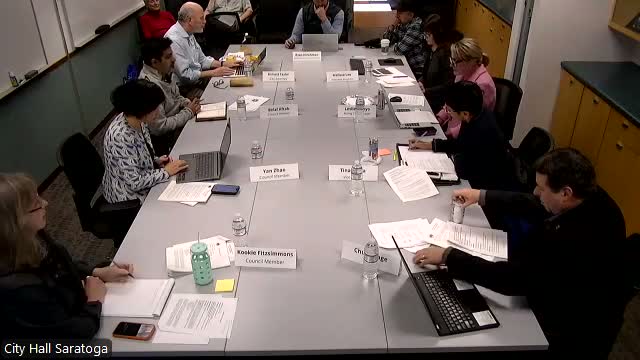
"Tonight's staff is seeking your direction on council priorities for law enforcement services in Saratoga as we approach the expiration of our current contract with the sheriff's department," Leslie, the staff presenter, told the council as she laid out the county proposal, the city's current service hours and an early-stage alternative submitted by the Los Gatos Police Department.
The staff report said the sheriff's office initially proposed a 33% increase near $11.9 million and later revised that to $11.6 million after regional negotiation. Leslie also said Los Gatos provided a preliminary, service-model estimate of about $9,500,000 annually, a proposal still under study and subject to further analysis and an MOU. The staff memo noted the existing contract includes school-resource officer funding (the city pays roughly 70% of that program) and cost controls tied to CPI and pension increases.
Council members repeatedly pressed staff for more operational data to compare the two models. One council member asked whether staff had figures on how many burglaries or investigations resulted in arrests or case closures; staff said the county's reporting system makes that difficult and that the requested data had not yet been provided. Staff also clarified a response-time figure in the packet: the sheriff's reported Priority 1 response time in the attachments was 8.28 minutes but, after county review and removal of two months that skewed the average, the recalculated time was about 6.83 minutes.
Several councilors asked how Los Gatos arrived at its lower per-capita and total estimates and whether the town's preliminary quote would include caps on future increases. Ryan Hinchman, the administrative services director (introduced during the staff report), said Los Gatos' consultants were proposing a floor and ceiling for annual increases and had discussed a conceptual floor of about 3% and a ceiling around 8%, but that the terms were not finalized. Council members said they wanted assurance that a transition would not produce a large unexpected "balloon" payment after signing.
Technology and transition logistics also factored into the discussion. Councilors asked whether drone responses and automated license-plate readers (ALPRs) were counted in response-time metrics and how camera systems (Flock) would behave if the city changed its law-enforcement partner. Leslie and other staff said the sheriff currently deploys drones from vehicles and the county is exploring an expanded drone program that could take years, while switching to Los Gatos would likely require new camera installations and could take about a year to complete; by contrast, moving to a county-supported vendor such as Axon could be done in months, staff said.
Public commenters urged the council to press the county for better data and to consider cost reductions. Resident Glenn said he supported public safety and the deputies but criticized the county executive and supervisors for the proposed increase, urged removing two traffic-enforcement officers to save roughly $860,000 and asked for a clearer breakout of the West Valley substation costs. "We're out of time, and we need to sign a contract with the sheriff for this year," Glenn said, adding that citizens feel the county has not negotiated on Saratoga's behalf.
Another resident, who identified herself as Anne Walton Smith and who previously served on the council, suggested the city consider targeted local revenue measures such as a special assessment to support public safety. A third commenter raised concerns about Flock camera security and asserted some camera data had been misappropriated; staff said they would follow up with the county and noted that Axon had offered comparable pricing for body cameras and records management in the county contract.
After extended discussion the council coalesced around two priorities: continue negotiating with the county to refine and potentially reduce the sheriff's proposed number, and pursue a more detailed proposal and MOU from Los Gatos so the council could compare long-run costs, service levels, response times and technology implications. Leslie told the council she would return with a refined proposal, answers to the specific questions raised (caps and ceilings, substation and response-time assumptions, detailed cost breakdowns and technology transition plans) and an MOU from Los Gatos for council review.
No formal vote or contract decision was reached at the session; staff was directed to obtain additional data, clarify outstanding items in writing and bring back a detailed comparison for future council consideration.