Get Full Government Meeting Transcripts, Videos, & Alerts Forever!
Get email alerts on the Fair Housing topic
No spam. Unsubscribe anytime.
Planning Commission recommends ordinance to codify reasonable accommodations, adds annual check‑in and reporting
Summary
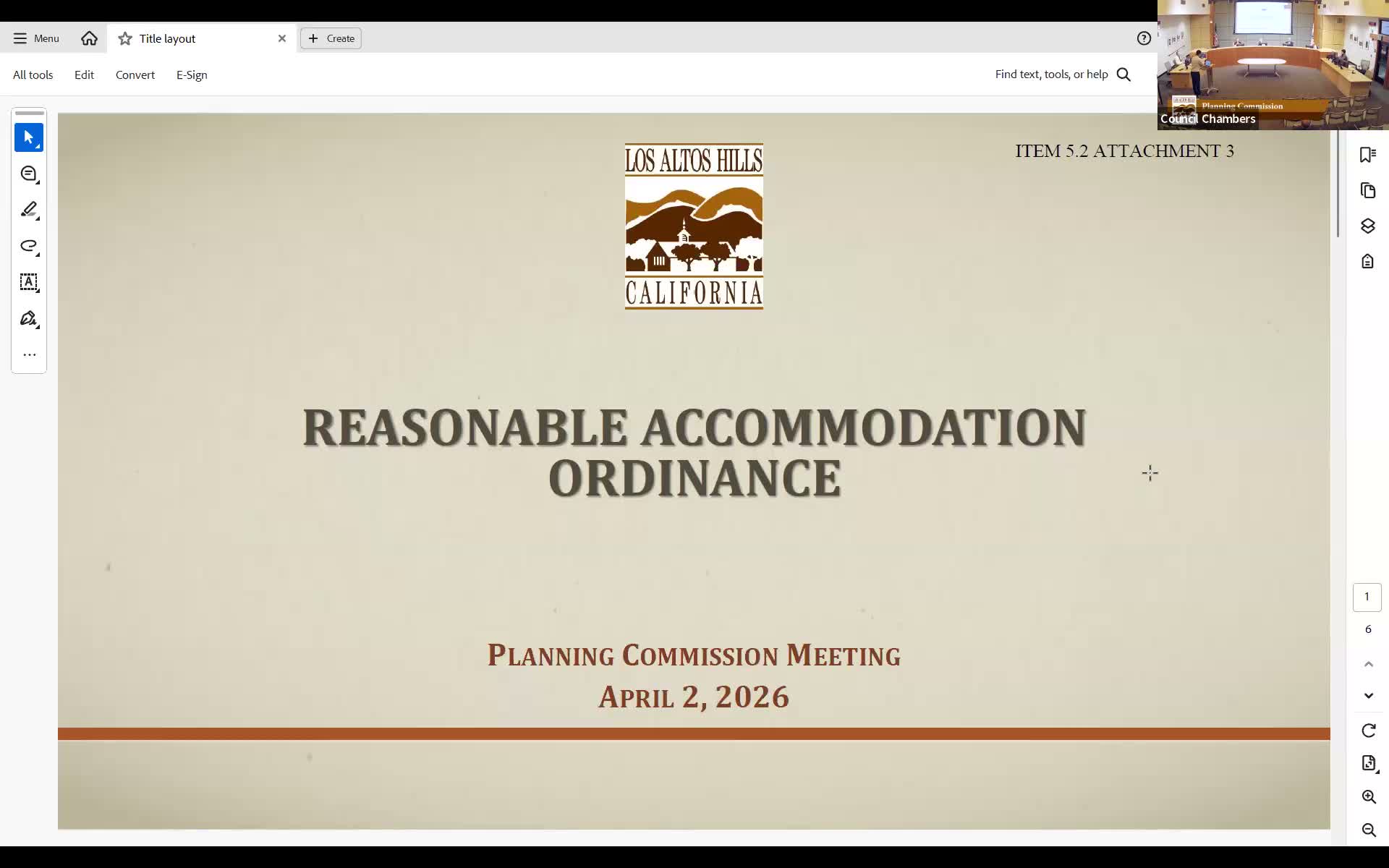
The commission recommended that city council adopt a reasonable‑accommodation ordinance implementing Housing Element program B‑9, codifying administrative review by the community development director, a 30‑day decision timeline, fee waivers, and — at the commission’s request — an annual check‑in requirement and reporting to the commission on approvals and terminations.
The Los Altos Hills Planning Commission voted April 2 to recommend that city council adopt a reasonable‑accommodation ordinance to implement housing element program B‑9, and added a requirement that staff perform an annual check‑in on accommodations and report applications (approved or denied) and concluded accommodations to the commission.
Management analyst Bruce Ahmed Badri told the commission the ordinance would codify an administrative process for requests tied to federal and state fair‑housing laws. The procedures would authorize the community development director to grant administrative accommodations, establish a 30‑day decision window for complete applications, allow verbal requests where necessary, waive fees for applicants with disabilities, and preserve appeal rights to the planning commission. Examples provided included reduced parking requirements, minor deviations for access, temporary additional occupants for caregivers, and operational adjustments for supportive housing. Staff emphasized that reasonable accommodations do not waive building, fire, or life‑safety code requirements.
Commission discussion focused on definitions of “minor deviations,” the qualifications of staff making determinations (the value of certified access specialists), whether and how accommodations could sunset, and how the town will avoid abuse while complying with fair‑housing obligations. Commissioners asked staff to include an annual check‑in requirement in the ordinance text and to publish periodic reports to the planning commission summarizing applications received and the high‑level nature of accommodations granted or concluded (without disclosing private medical details). A public commenter recommended monthly or periodic reporting so the commission could track staff decisions.
The commission moved, amended the ordinance recommendation to include the annual check‑in requirement in the ordinance itself (with reporting procedures implemented administratively), and approved the recommendation by roll call. Staff said the ordinance and supporting internal procedures will go to city council for introduction and adoption; staff also agreed to retain records and produce periodic (annual) summaries to the planning commission.
Next steps: staff will prepare the ordinance language as recommended (including the annual check‑in provision) and return it to council; staff will also build the administrative checklist and reporting process required for yearly monitoring and for documenting approvals and terminations.