Get Full Government Meeting Transcripts, Videos, & Alerts Forever!
Get email alerts on the Open Government topic
No spam. Unsubscribe anytime.
Los Altos Hills council cites Brown Act litigation threat, moves to closed session after public comments
Summary
At a special April 16 meeting the Los Altos Hills City Council heard residents criticize a vaguely worded closed-session agenda tied to a threatened Brown Act lawsuit; after legal guidance from the city attorney the council allowed extra public comment and then adjourned into closed session.
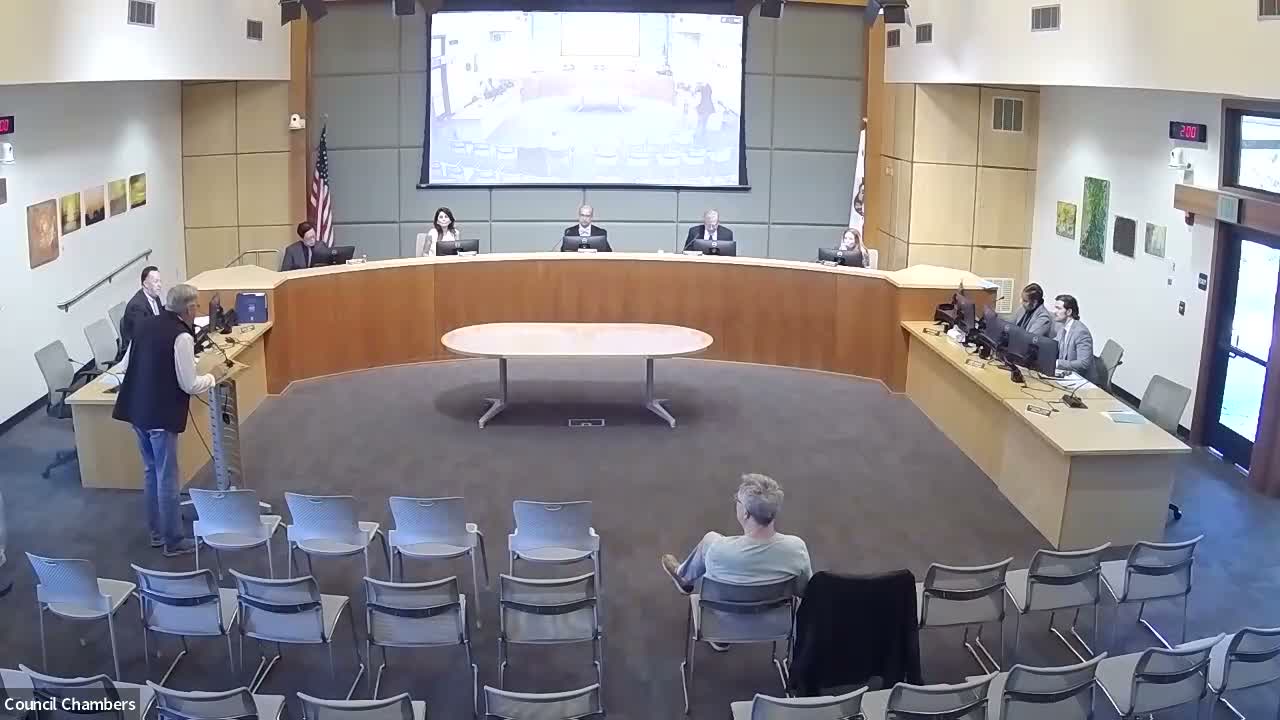
The Los Altos Hills City Council met in a special session on April 16, 2026, and adjourned into closed session after discussing correspondence the town received that the city attorney said contained a threat of litigation from residents in the O'Keefe area.
Resident Michael Grady opened public comment, saying he was "a little concerned about the lack of information on the agenda" and reporting "rumblings" that the O'Keefe group had threatened Brown Act actions and was seeking a settlement. City Clerk Erica Miller and the mayor confirmed the two-minute public‑comment limit announced at the start of the meeting.
City Attorney Mattis told the council the closed session related to a letter the town had received from a lawyer for O'Keefe-area residents and that the letter included a threat of litigation. "The words that are on the agenda are the words right out of the Brown Act," Mattis said, describing the agenda language as the statute's safe-harbor wording for time‑sensitive threats of litigation.
Public commenter John O'Connell sharply disputed the attorney's interpretation, urging the council against secrecy and saying residents in neighborhoods including Saddle Mountain were "absolutely living in terror." O'Connell quoted subdivision d and paragraph e of the Brown Act, arguing the provision permitting nondisclosure applies only when facts giving rise to litigation are not yet known to a potential plaintiff.
Several council members said they preferred to be more transparent where doing so would not jeopardize the town. The mayor asked whether the council wished to allow additional public comment; the council agreed. After further brief discussion the mayor closed public comment and directed that the council adjourn into closed session to consider the correspondence; Mattis said he would present his legal take at a future meeting.
No formal vote was recorded in open session on the closed-session item; the council moved into closed session as announced. The meeting record indicates members agreed to seek further legal context at a subsequent public meeting rather than resolve the dispute during the public-comment period.