Get Full Government Meeting Transcripts, Videos, & Alerts Forever!
Get email alerts on the Infrastructure Electricity topic
No spam. Unsubscribe anytime.
Planning Commission approves variance for above‑ground transformer at Christopher Lane
Summary
The Los Altos Hills Planning Commission approved a site‑development permit and variance allowing a pad‑mounted transformer to be sited inside setback areas at 28155 Christopher Lane, with conditions limiting bollard height and requiring future size upgrades to return for review. The decision passed by roll call and is subject to a 21‑day appeal period.
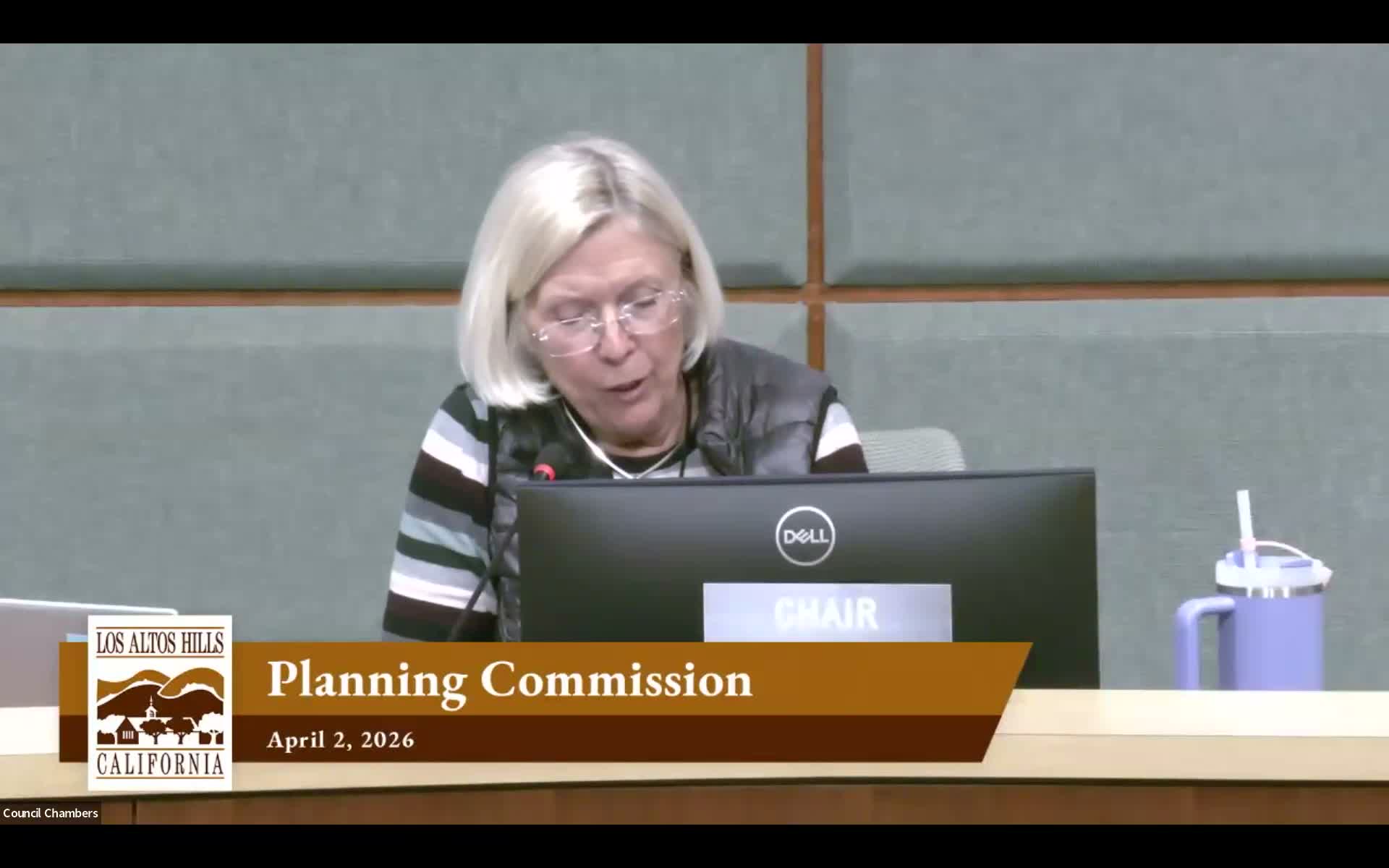
The Los Altos Hills Planning Commission voted unanimously April 2 to approve a site‑development permit and variance allowing a pad‑mounted transformer to be installed within required front and side setbacks at 28155 Christopher Lane.
Jonathan Fox, senior planner, told the commission the transformer would sit on an 18‑square‑foot concrete pad in the public utility easement, serve four properties, and sit roughly 13 feet from the edge of pavement. Staff recommended a categorical CEQA exemption under section 15303(d) and proposed conditions that include limiting bollards to a maximum height of 37 inches if required and requiring any future size upgrades to return to the commission for a new variance.
The project applicant and contractor described a lengthy timeline in which the work to deliver separate electrical service to an SB 9 unit and an ADU has been delayed for months because PG&E has not approved undergrounding in this location and has required separate metering for accessory units. The applicant said the transformation from underground to above‑ground options was driven by PG&E’s design, safety concerns and supply constraints, leaving occupants unable to inhabit newly completed units.
Commissioners pressed staff and the applicant on clearance dimensions, vegetation around equipment, whether the existing main residence’s service could temporarily serve the accessory units, and how PG&E’s interpretation of tariffs (Rule 18) has changed the utility’s approach. Staff said PG&E had vetted demand and required separate connections for the new units; staff also reported ongoing conversations with PG&E about supply and policy and agreed a planning commissioner could join further meetings.
After discussion, a commissioner moved to approve the site‑development permit and variance for a transformer sited 1 foot from the front property line (40 feet required) and 5 feet from the side (30 feet required), with the standard conditions and the two project‑specific conditions. The motion passed by roll call: Commissioners Patel, Brito, Vice Chair Waschera and Chair Endicott all voted yes. The approval is subject to the standard 21‑day appeal period.
Next steps: pending the appeal period, the applicant will coordinate with PG&E to schedule installation under the conditions approved by the commission.