Get Full Government Meeting Transcripts, Videos, & Alerts Forever!
Get email alerts on the User Fees topic
No spam. Unsubscribe anytime.
Town’s fee study finds large shortfall; consultants propose restructuring and examples for public review
Summary
A user‑fee study covering planning, building and engineering finds Los Altos Hills recovers roughly 43% of full service costs (about $1.5M collected vs. $3.4M full cost), and consultants proposed fee rebalancing with sample project examples and possible phased implementation.
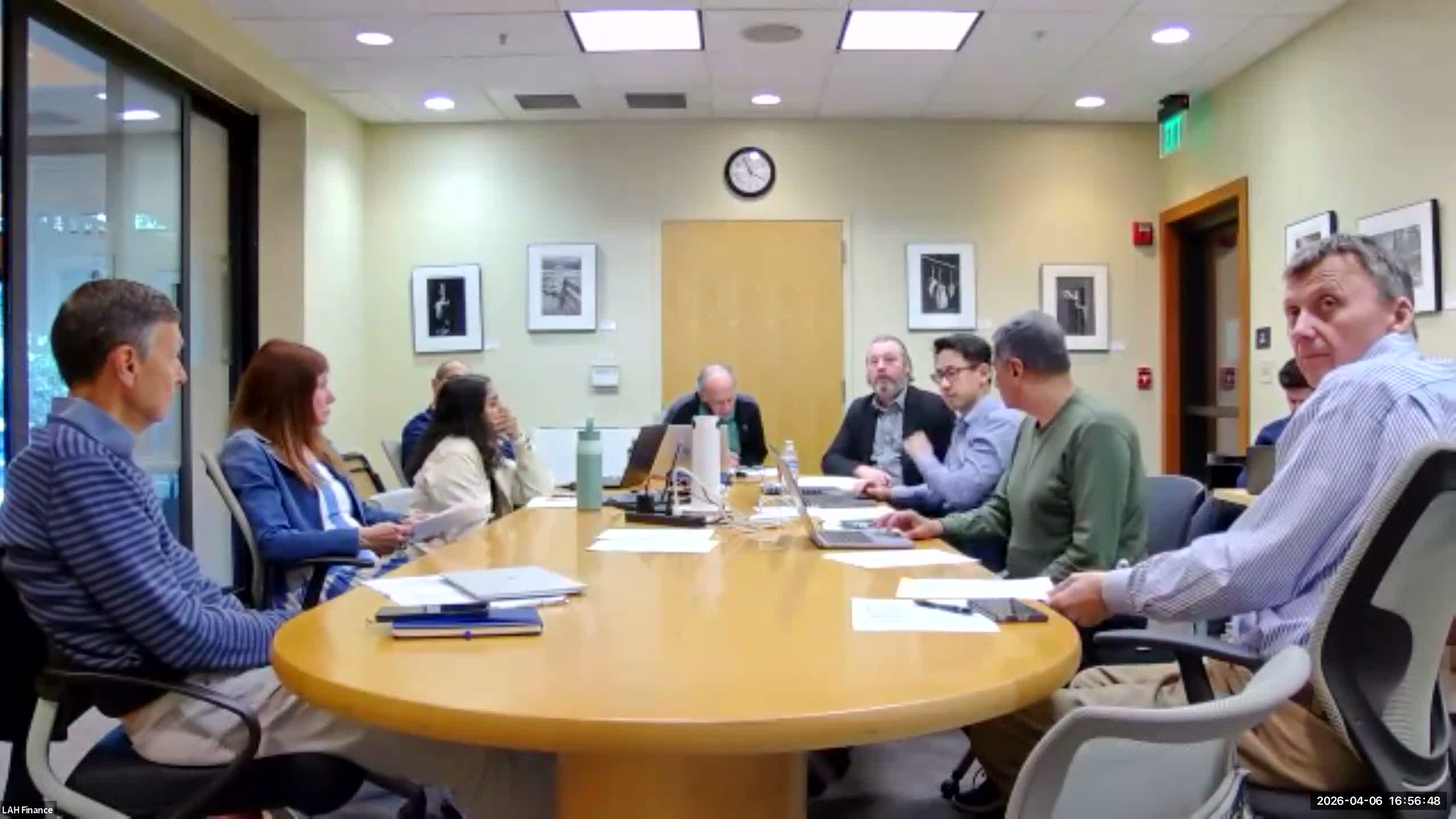
Consultants from MBS presented a user‑fee study to the Finance & Investment Committee on May 1 that shows the town currently collects about $1.5 million in planning, building and engineering fees but would need about $3.4 million to fully recover the cost of providing those services, according to Nicole Kism, principal at MBS.
Kism described a standard, bottom‑up methodology: identify direct and indirect costs, allocate overhead, estimate time per service and compute fully burdened hourly rates. The study produced a full‑cost recovery recommendation for most fee categories; building permits were constrained in some cases by state caps (for example, solar permit fees), but the overall model generated an estimated $1.9–$2.0 million additional recoverable amount if the town adopted fee ceilings across the board.
Committee members pushed for succinct, public‑facing materials showing the practical impact of proposed changes. Several asked for: two or three typical examples (a 5,000‑square‑foot single‑family house, an accessory dwelling unit); an 80/20 summary that highlights the fees responsible for most revenue; a comparison with peer jurisdictions (Portola Valley, Woodside, Los Altos, Atherton) and alternatives for phasing increases (for example, multi‑year increases or capping recovery at 90%). Kism agreed to provide project‑level examples and to work with staff on appendix excerpts showing the top revenue drivers.
Engineering staff explained the new allocation model assigns previously cross‑charged engineering time more directly to engineering fee lines; the change increased measured hourly fully burdened rates in some divisions and was a major driver of the higher fee recommendations. Committee members asked staff to explain the overhead and allocation differences between the current budget and the study so council members and the public can see what caused the increases.
Kism suggested allowing policy choices to temper certain fees for public‑safety or compliance reasons; the committee noted that charging below full cost in safety‑related areas can encourage compliance and increase public safety.
Next steps: consultants will circulate the draft report and illustrative examples to staff and the public, return with a condensed list of the top revenue drivers, and provide peer comparisons and phased implementation options for the council’s consideration.