Get Full Government Meeting Transcripts, Videos, & Alerts Forever!
Get email alerts on the Inclusionary Housing topic
No spam. Unsubscribe anytime.
Consultants recommend 10%–15% inclusionary thresholds, outline fee options for Los Altos Hills
Summary
Strategic Economics recommended Los Altos Hills adopt 15% on-site inclusion for ownership projects and 10% for rentals under current conditions, and presented two fee approaches — in‑lieu fees tied to an inclusionary requirement and an impact fee subject to the Mitigation Fee Act.
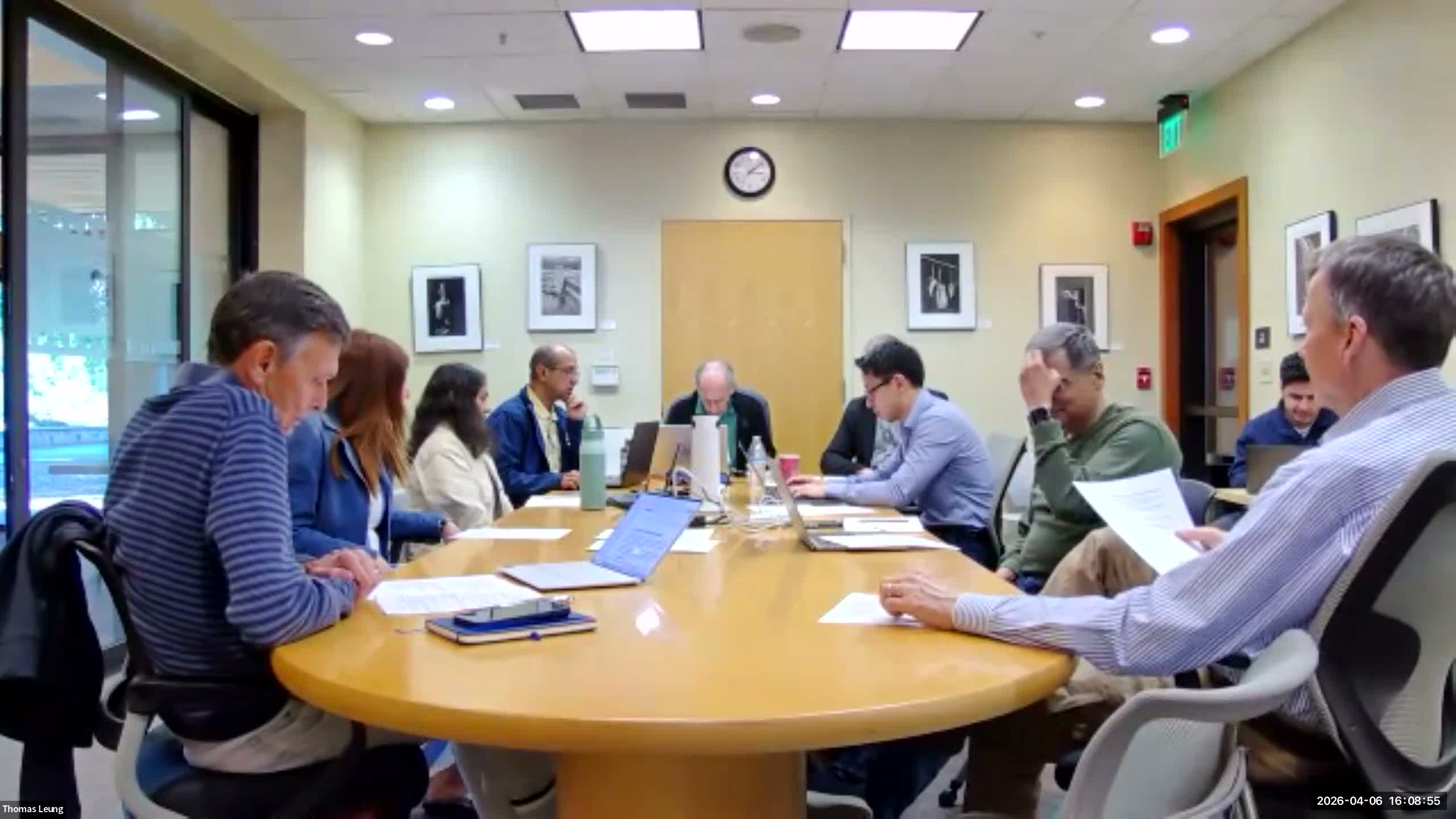
Los Altos Hills’ Finance & Investment Committee heard on May 1 from Strategic Economics about options for an inclusionary housing ordinance meant to help the town meet its Regional Housing Needs Allocation for 2023–2031. Derek Braun, principal at Strategic Economics, told the committee the study tested prototypes and found ownership townhome and condominium projects could support a 15% on‑site inclusionary requirement, while rental projects are more constrained and a 10% requirement is likely more prudent at present.
Braun explained municipalities generally set inclusionary percentages and either require on‑site deed‑restricted units or allow developers to pay an in‑lieu fee to a housing trust. “An inclusionary housing ordinance that sets aside up to 15% of housing units in new development,” he said, would be one track; the alternative is an in‑lieu fee that scales to the developer’s affordability gap so the fee approximates the cost of providing the units on site.
He distinguished in‑lieu fees from residential affordable‑housing impact fees: an in‑lieu fee is tied to an inclusionary requirement and is not treated as an impact fee under the Mitigation Fee Act, while an impact fee must meet a legal nexus showing and is subject to mitigation‑fee reporting and spending rules. Braun told the committee his team’s charts show legally justifiable maximum nexus fees in prototype scenarios (examples cited in the presentation ranged up to roughly $91–$134 per square foot for certain prototypes), but he emphasized most jurisdictions adopt fees well below that ceiling — commonly in the $5–$50 per square foot range — and that jurisdictions may choose a lower fee deliberately.
Braun also framed spending expectations for fee revenue. Reviewing recent 100% affordable projects in Santa Clara County, he reported typical development costs per affordable unit around $825,000, with local contributions averaging about 20% (roughly $165,000 per unit) — figures staff said they will use to model how much fee revenue would be required to subsidize production.
Committee members pressed for concrete arithmetic examples showing homeowner impacts (for instance, a 5,000‑square‑foot home or a common ADU scenario) and for clarity on whether units funded by in‑lieu money could be located outside town (Braun said they ordinarily would not count toward the town’s production goals). Braun said the draft study and illustrative fee examples will be published ahead of the city council meeting on May 16 for public review and that the planning commission and council will receive the draft for feedback before any formal ordinance is adopted.
The committee requested follow‑up materials including: specific dollar examples of how an in‑lieu or impact fee would apply to typical single‑family and multifamily projects; a clear explanation of the nexus methodology and assumptions; and scenario runs showing revenue projections at different chosen fee levels. The study team said it will circulate the draft report in the next few days and is prepared to return for additional meetings if the committee or council requests further scenarios.
Next procedural steps: the draft study will be provided to the planning commission and then to the city council; any ordinance would follow the standard public hearing and adoption process.