Get Full Government Meeting Transcripts, Videos, & Alerts Forever!
Get email alerts on the Work Plan Adoption topic
No spam. Unsubscribe anytime.
Los Altos Hills council finalizes two‑year work plan; schedules budget requests for key projects
Summary
The Los Altos Hills City Council on Feb. 4 approved changes to its two‑year staff work plan, sending several projects to the upcoming budget process and deferring others to committees. Council voted 5–0 to adopt the prioritized list of adds, drops and committee handoffs.
The Los Altos Hills City Council voted unanimously Feb. 4 to approve revisions to the town’s two‑year work plan, advancing a set of projects that staff will present in the spring budget process while deferring several technical tasks to town committees.
Acting City Manager Cody Einfeldt told the special meeting the exercise is intended to align council priorities with limited staff capacity and the budget calendar. ‘‘This is the culmination of a lot of staff effort and a lot of effort from council and the committees,’’ Einfeldt said, urging members to focus on what the town can achieve within current resources.
Why it matters: the council’s priorities determine what staff will work on and what will require new funding. Staff said the adopted plan will feed directly into the proposed budget that is expected to be scheduled for review in May and June, with fiscal changes effective July 1 if approved.
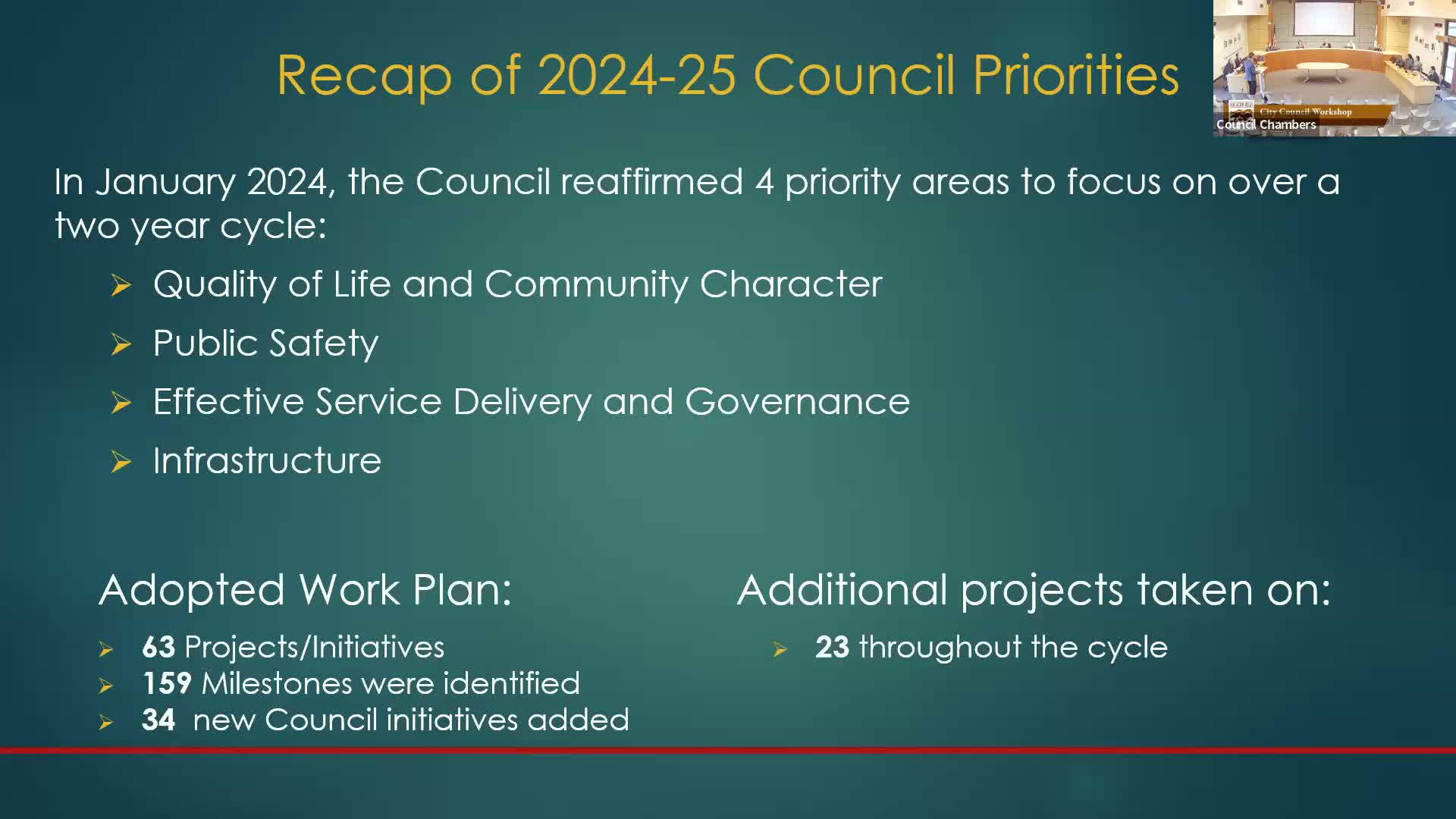
What was adopted: staff presented a two‑year inventory that showed roughly 60 projects for the coming cycle (39 new, 21 carryovers), with 27 items categorized as beyond current capacity. Following a dot‑voting exercise by council members and a staff feasibility review, the council directed staff to include the following projects as budget asks in the upcoming proposed budget: inspection‑scheduling software, improved deposit management for development projects, a heat‑pump/efficiency rebate task, a native‑garden/heritage‑house landscaping effort, and exploration of PRA (public records) software for records processing.
Staff described these items as requiring additional funding or consultant support to implement. ‘‘These projects have a price tag — it might be additional funding, a consultant, or another full‑time employee,’’ Einfeldt said. For projects judged feasible within current capacity, staff said they will be absorbed without separate budget requests or will be assigned as committee handoffs.
Committee handoffs and deferrals: the council agreed to hand the greenhouse‑gas inventory work to the Environmental Design and Protection committee and to refer senior‑program activities at the heritage house to the senior commission. Staff and council emphasized those items would still require some staff assistance for data collection or coordination.
Clarifications and next steps: Director Bradford and other staff committed to provide further granularity on estimated staff hours and the budget impacts of candidate projects before final adoption of budget allocations. Staff also noted some packet items contained duplicate or mis‑filed entries and said corrected versions will be circulated.
Vote and procedural note: a roll call vote following the meeting’s deliberations recorded five yes votes and no no votes; the council adopted the proposed changes as the working deliverable from the session and instructed staff to return with budgetary proposals and timelines for items that require funding.
The council’s prioritization will be reflected in the proposed budget presented later this spring; staff said they will also meet with committees to refine scope and identify which tasks can be moved forward without additional appropriations.