Get Full Government Meeting Transcripts, Videos, & Alerts Forever!
Get email alerts on the Transportation topic
No spam. Unsubscribe anytime.
Redwood City staff outline funding gap and projects to restore road conditions; council backs targeted near-term work
Summary
City engineers said Redwood City's network Pavement Condition Index has declined from 78 (2015) to about 66 (projected 2026) and recommended a mix of treatments and additional funding. Staff estimated $35 million over five years to restore a PCI of 70 and detailed priority projects including a $2.6 million Broadway overlay with ADA upgrades.
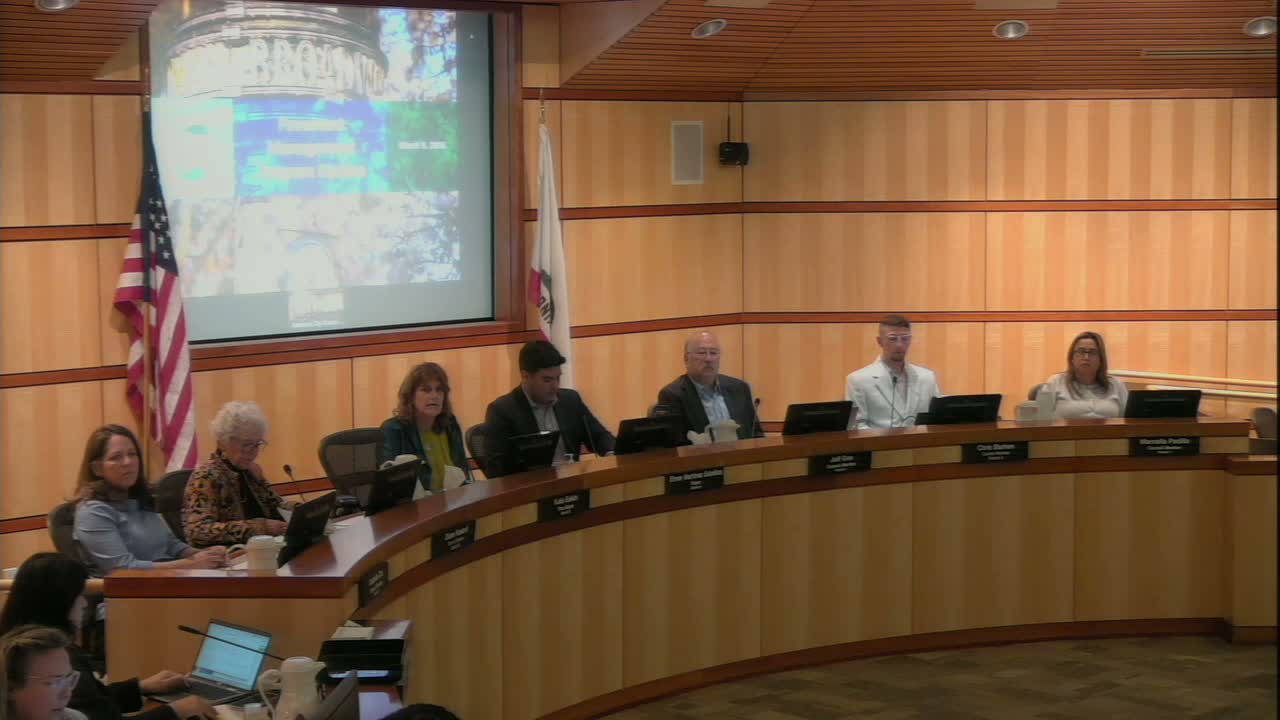
At a March 9 study session, Redwood City's engineering and transportation staff presented an update on the city's pavement management program and outlined options to arrest a multi-year decline in road conditions.
"If you remember nothing after today, please remember PCI," director Tanisha Werner told the council, using the Pavement Condition Index (0—100) to summarize roadway condition and program goals. Werner said Redwood City has roughly 158 centerline miles of roadway with an estimated asset value of about $387 million; the network PCI dropped from about 78 in 2015 to 69 in 2024 and staff estimates a further decline toward 66 by 2026 if funding is not increased.
Staff presented two funding scenarios: about $35 million over five years (approximately $7 million per year) to get the network to a PCI of 70, and roughly $49 million over five years (about $9.8 million per year) to reach a PCI of 74. Current recurring funding was described at roughly $5 million per year from a combination of Senate Bill 1 (about $1.5 million), a sales-tax transportation allocation (roughly $1—2 million) and capital outlay; grant funding is used opportunistically.
Tanisha Werner and consultant pavement manager Jaime Rodriguez outlined near-term projects and treatments. The first large spring project is an overlay on three Broadway segments — a $2.6 million job that includes close to $1 million in Americans with Disabilities Act curb-ramp and pedestrian improvements. Staff recommended targeted treatments (capeseals, microsurfacing, cold-in-place recycling where appropriate) and emphasized coordinating pavement work with utility projects to avoid repeated trenching. Rodriguez told the council that "cape seals are one of the most effective treatments we have" for extending pavement life in many neighborhoods.
Council members pressed staff on several points: the basis for PCI estimates (staff will commission a city-funded PCI reset analysis in 2027), neighborhood selection (centennial and Stambaugh-Heller prioritized because of utility impacts and recent trenching), the five-year moratorium on digging streets that receive overlays, and opportunities to incorporate safety upgrades such as bulb-outs and green bike lanes during repaving. Vice Mayor Aiken and other councilmembers expressed support for aspirational PCI targets (up to 74) if funding can be found; several members urged more frequent progress reporting.
Public comment: Dylan Finch, an in-person speaker, urged the city to include bulb-outs and concrete daylighting where possible so those safety features do not rely solely on paint or enforcement.
Next steps: staff said they will move to outreach and construction phases for the projects described, continue grant applications, perform a network PCI reset in 2027, and return to council with progress reports and funding recommendations.