Get Full Government Meeting Transcripts, Videos, & Alerts Forever!
Get email alerts on the Economic Development topic
No spam. Unsubscribe anytime.
Mayor touts convention center expansion and Trades District growth amid tighter revenue outlook
Summary
Mayor Carrie Thompson said the convention center expansion and Trades District projects will bring outside spending and jobs, while warning that SEA1 will tighten municipal revenues and bonding capacity, requiring a prioritized capital program.
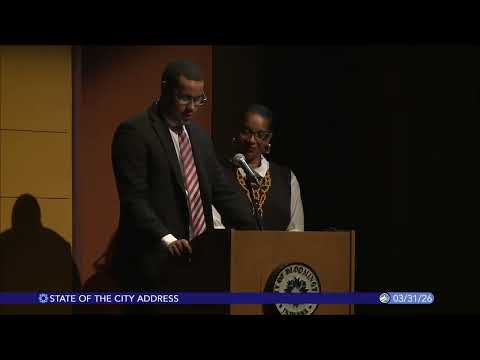
Mayor Carrie Thompson told the Bloomington Common Council that major economic projects and a clearer capital plan will help the city grow while responding to a constrained fiscal environment.
Thompson said the convention center expansion at Third and College is expected to bring "millions of dollars in new spending from outside Bloomington each year" and that the Trades District is attracting employers and projects, including a new hotel that closed last Wednesday and is expected to break ground this summer.
The mayor linked those projects to everyday investments: the administration paved 32 miles of streets in the first two years of the current term and will continue leveraging grants such as INDOT’s community crossing matching program. She said parking meter revenues will support more than $400,000 in downtown paving and infrastructure projects in 2026 and that the controller is working with parks to create sustainable maintenance plans, noting Switchyard Park’s annual maintenance is roughly $125,000.
But Thompson cautioned that Senate Enrolled Act One (SEA1) is changing how local governments are funded and will slow municipal revenue growth and tighten bonding capacity. "Cities across Indiana, including Bloomington, will have to make hard choices," she said, and the administration will pair reduced resources with a priority list for top capital projects.
She also reported that the city has caught up on delayed audits and is on track to complete the 2025 audit on time, a step she framed as restoring financial discipline needed to make prioritization decisions.
Thompson concluded by emphasizing a city identity and branding effort intended to help Bloomington compete for talent and investment and by asking residents and partners to stay engaged as the administration implements its capital priorities.