Get Full Government Meeting Transcripts, Videos, & Alerts Forever!
Get email alerts on the Public Safety Facility topic
No spam. Unsubscribe anytime.
Proposed rezoning for jail and public safety site draws sustained neighborhood opposition; commission postpones vote
Summary
Clark County and the sheriff asked the Springfield City Commission to rezone 28.37 acres on Springfield-Jamestown Pike to allow an institutional/public-safety facility. Presentations cited a feasibility study and a nearly $4 million state grant; dozens of residents opposed the location and commissioners voted unanimously to postpone the rezoning to April 7, 2026.
Clark County and Sheriff Clark asked the Springfield City Commission to rezone 28.37 acres at 2683 Springfield-Jamestown Pike from Springfield Township Agricultural District to the City PIE (Institutional and Educational) district, but the proposal met sustained opposition from nearby residents and was postponed to the commission's April 7, 2026 meeting.
City staff said the annexed parcels are undeveloped, outside the floodway, and compatible with the Clark County comprehensive plan's mixed‑use, low‑intensity designation; staff and the city Fire Department noted future site plans must meet fire and building codes. Cedar (CEDA) Regional Planning Commission recommended approval by a 4–1 vote.
County commissioner Charles Patterson said the county has a letter of intent to purchase the property contingent on due diligence and zoning approval and that a 10‑acre minimum was necessary to build a single-floor facility allowing future expansion. Patterson said the county evaluated more than 20 sites and concluded a new facility best met long‑term needs after a feasibility study recommended building new rather than renovating the existing downtown jail.
Sheriff Clark described site‑selection priorities as rapid access to Interstate 70, improved security and standoff buffering to reduce contraband and unauthorized access, and the ability to expand capacity. He cited a consultant range of 450–750 beds needed over 20–30 years and said the county is targeting the lower end of that estimate. Clark also described current conditions at the downtown facility—an Ohio rated capacity of 164 with a 2025 average daily population near 200—linking overcrowding to fights, hygiene and maintenance issues, and operational limitations.
Commissioners asked about alternatives, costs, and public sentiment. Officials said the state has offered a grant of "just less than $4 million" to support the project, but that the county will need further funding; consultants warned of construction‑cost inflation and gave a rough illustrative range that a project could reach into the triple digits of millions depending on scope.
During the public‑comment portion, dozens of speakers raised concerns about locating a large public safety complex adjacent to established backyards and near schools, the loss of property tax revenue that would follow placing tax‑exempt government facilities on annexed land formerly targeted for commercial development, perceived lack of transparency and community engagement, traffic and sight‑line impacts on Route 72, and neighborhood and property‑value harms. Some speakers urged using downtown or other blighted sites instead of farmland near residential areas. A few commenters supported the need for improved detention and public safety facilities but asked for different siting.
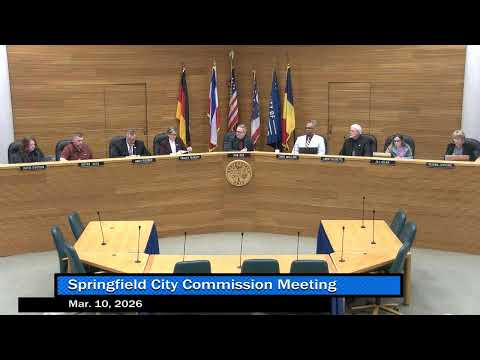
After extended discussion, a commissioner moved that the rezoning item be postponed to the commission's April 7, 2026 meeting for second reading and further consideration. The motion was seconded and carried on a 5–0 roll call vote (Mr. Rickettts, Mr. Riggsby, Mrs. Tacket, Mr. Wallace and Mr. Rue voting yes).
Next steps: the rezoning remains pending; staff said future steps would include review by the board of zoning appeals for any government use requiring conditional permits, additional engineering studies (geotech, storm water, traffic, sight lines), and neighborhood buffering discussions if the county pursues the site.