Get Full Government Meeting Transcripts, Videos, & Alerts Forever!
Get email alerts on the Public Comment topic
No spam. Unsubscribe anytime.
Marion public commenter issues wide-ranging, unverified warnings during five-minute comment
Summary
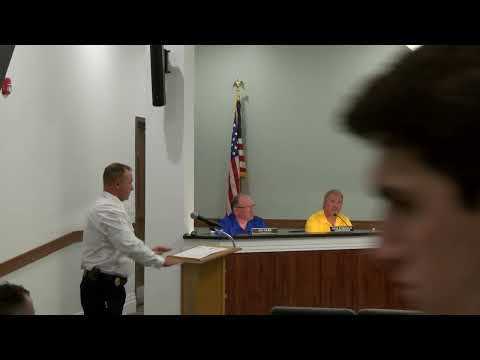
James E. Johnson, a self-identified Vietnam veteran, used his allotted five minutes to make a series of unverified claims — including assertions about foreign interference, a new law authorizing violence against election challengers, and a weather-control conspiracy — and urged creation of a local 'constitutional tribunal'. Council did not act on his requests.
James E. Johnson, who identified himself as "James E Johnson" and a Vietnam veteran, used the council's public-comment period on Oct. 25 to make a series of broad, unverified assertions and to urge council action.
Johnson told the council he had compiled a lengthy document he wanted distributed "through Marion so that it will expand through Illinois and the rest of United States," and said a "constitutional tribunal" was needed locally. He advanced multiple claims about national security and election integrity, saying, for example, that "they passed the law the Democrats did today that if you contest the election ... they got a right to shoot you" and asserting foreign actors would tamper with the upcoming election.
He also linked extreme weather events to deliberate manipulation, saying "this is all being controlled through weather control it's called HARP" and warned of hurricanes, earthquakes and widespread fatalities if his recommendations were not followed. "I'm telling you the truth we need constitutional priv[ileges]," he said in closing.
The statements were made during the public-comment portion and were not substantiated or debated in the meeting record. Council procedure preserved the five-minute limit and moved on to the agenda after Johnson's remarks; no motion or formal action resulted from his comments.
Context: Public-comment periods allow citizens to address the council but do not themselves trigger investigation or policy changes unless council later places an item on the agenda. The claims Johnson made, as presented, were not supported by documents or evidence on the council record.