Get Full Government Meeting Transcripts, Videos, & Alerts Forever!
Get email alerts on the Events topic
No spam. Unsubscribe anytime.
Salt Lake City hears divided testimony on six‑month street closures for Temple Square reopening; concerns about emergency access and equity
Summary
Council staff proposed temporarily closing several streets adjacent to Temple Square for about six months in 2027 to manage crowds for the Temple open-house; public testimony split between downtown businesses and faith/community leaders who supported closures for safety and visitor experience and neighborhood advocates who raised concerns about access to hospitals, transit disruption, parking displacement and potential discriminatory enforcement or fencing.
Salt Lake City council members and staff heard extended public comment on a proposal to temporarily close portions of streets adjacent to Temple Square for roughly March through October 2027 to support safety and crowd management during the Church of Jesus Christ of Latter‑day Saints' temple reopening open‑house period.
City staff described closures intended to facilitate crowd control, pre‑screening and pedestrian circulation while organizers plan shuttle parking, transit incentives and mitigation. Opponents—particularly neighborhood council representatives from Guadalupe, Capitol Hill and Marmalade—urged the council to ensure at least one major east‑west connection remains open for emergency access to LDS Hospital and other essential services; they also requested a temporary permit parking program with robust enforcement and a share of mitigation funds to be directed to impacted neighborhoods.
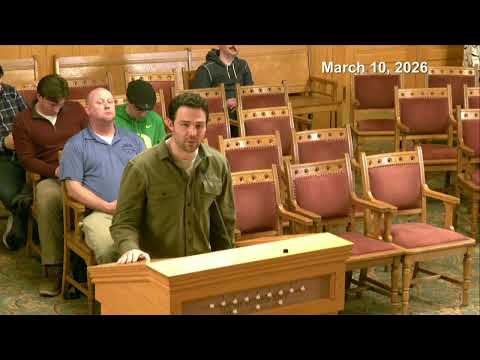
"Closing both corridors for six months effectively cuts off our primary access to LDS Hospital," said Jake Seestrand, vice chair of the Capital Hill Community Council, who proposed four mitigation steps including permitting, enforcement, and dedicated mitigation funding from church fees. Several speakers—small business owners, downtown associations and former elected officials—supported closures, saying they would enhance visitor safety and help downtown merchants capture visitor spending. Sara Jameson, owner of a downtown tour company, said closures as drafted would harm her ability to pick up customers and asked for operational clarity to avoid revenue loss during her busiest season.
Civil‑liberties and cyclist advocates urged the city to avoid fencing that could restrict bicycle and pedestrian access and asked the council to ensure non‑discrimination in access points. Jen Colby asked the council to remove the word "exclusive" from draft language, forbid fencing, and include a nondiscrimination clause for closures.
Council members acknowledged the scale of impacts; District representatives said they would press staff to provide more detail about access for schools, hospitals and residents. The council closed the public hearing and deferred action to a future meeting to allow staff and project partners time to respond to the range of concerns and provide more detailed mitigation and access plans.