Get Full Government Meeting Transcripts, Videos, & Alerts Forever!
Get email alerts on the Charter Amendment topic
No spam. Unsubscribe anytime.
Littleton CRC urges council to review charter-amendment thresholds and fix inconsistent petition rules
Summary
The Charter Review Committee recommended that City Council review Section 8 and related provisions to reconcile inconsistent signature thresholds and voter denominators for charter amendments, initiatives and ordinances, and to consider aligning the difficulty of amending the charter with the ordinance process.
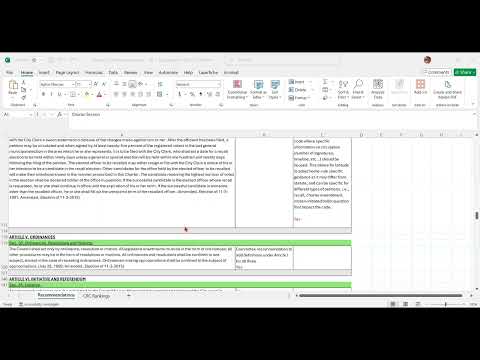
The Littleton City Charter Review Committee voted to send recommendations to City Council calling for a review of how the charter and code treat citizen-initiated changes, after a sustained discussion over Section 8 and related petition provisions.
Committee members said the charter currently contains a patchwork of signature and voting thresholds that can make a permanent charter change easier than passing an ordinance. Reed, the committee's attorney, noted that state law (Title 31) governs much of the petition and election mechanics but that municipalities can adopt more restrictive rules. "State statute sets the procedure for amending overall," Reed said, describing how different statutes and charter language point to different voter bases and percentages.
Members flagged three concrete problems: varying petition denominators (registered voters vs. voters in prior elections), inconsistent signature percentages (examples discussed included 5%, 10% and 15% thresholds), and placement of numeric timelines in the charter rather than in municipal code where they could be updated if state law changes. Several members said a key remedy would be better cross-references to Title 31 and a consistent rule that preserves citizens' access while avoiding frequent, ad hoc charter changes. One proposal discussed was to make the charter amendment path at least as stringent as the ordinance path, so the foundational document is not easier to alter than routine code.
The committee reached consensus to forward the issues and a package of suggested options to council for its April 14 study session, asking staff to provide comparative examples (e.g., Denver, Boulder) and legal citations. The committee's staff-recommended placement of technical timelines in municipal code received support from members who wanted the charter to be a high-level document rather than a ledger of numeric deadlines.
Next steps: the committee will present its majority and minority views to City Council on April 14, with a recommendation to clarify cross-references to statute, consider aligning petition thresholds across charter paths, and ensure charter text is citizen-facing and unambiguous.