Get Full Government Meeting Transcripts, Videos, & Alerts Forever!
Get email alerts on the Public Comment Surplus Sites topic
No spam. Unsubscribe anytime.
Neighbors and advocates press Ventura Unified to choose between trade school, housing or a park for surplus sites
Summary
Dozens of public commenters urged divergent outcomes for three surplus Ventura Unified sites: trade/vocational training for neurodivergent adults at Avenue, affordable/workforce housing for teachers and families, and preservation of Washington School land as park or community center; speakers emphasized historic preservation, traffic and community needs. The board took no action.
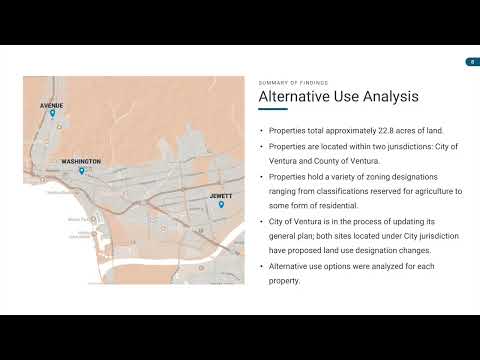
More than 40 speakers used the Ventura Unified town hall to press competing visions for the district’s three surplus properties, with repeated themes that split the neighborhood and stakeholder groups.
Trade-school advocates, including parents and adult-autism service providers, urged the board to favor a vocational training campus at the former Avenue Elementary School. "We are here to talk about creating a trade school for a neurodiverse community," said Jenna, a local parent. Eighth-grader Gavin White described wanting "more options and opportunities" after high school and urged the district to allow Avenue to become a trade school where neurodivergent learners could train for work.
Several speakers described proposals led by local advocates and organizations to convert the Avenue campus into a hands-on center for technology, culinary arts, automotive and other trades tailored to learners on the autism spectrum. Proponents argued the site’s historic building could be preserved and repurposed for training and employment pathways.
Others asked the district to pursue affordable or workforce housing on one or more surplus parcels, stressing the link between housing affordability, declining school enrollment and staff recruitment and retention. "Nearly 56% of staff reported financial strain," said Luis Arnandez, citing a 2024 district housing survey; he and others urged prioritizing teacher and classified-staff housing. Jeff Lambert of the Ventura Housing Authority said his agency submitted on one site and expects to propose plans that would preserve the school building’s front lawn while adding 2–3‑story housing behind it and public space on site.
A large group of Midtown residents and longtime neighbors urged the board to retain Washington Elementary’s open space as a community park and to protect its historic building. "Midtown has the least park space per person in Ventura," said Shri Bert, who cited California Education Code sections 17485–17500 (referred to in the transcript) as authority encouraging preservation of recreational schoolyards or replacement open space when school property is sold. Neighbors said narrow streets, privacy and parking make dense housing at Washington incompatible with the area’s scale.
Speakers repeatedly raised three shared practical points: the Avenue building’s historic-eligibility status, the lack of environmental reviews to date, and that the district’s RFP process constrains what the district may ultimately accept because it is limited to proposals it receives. Many public commenters asked the district to weigh proposals that pair housing with preserved park space or to pursue public-acquisition paths so a park or community center could be guaranteed rather than left to market responders.
The board heard support and concerns for each option but did not vote. Superintendent Antonio Castro reminded residents that RFP submissions and an online feedback form will be accepted through the district’s agenda center, and staff and DCG will review proposals before the board considers any recommendation.