Get Full Government Meeting Transcripts, Videos, & Alerts Forever!
Get email alerts on the Postsecondary Success topic
No spam. Unsubscribe anytime.
District data show college-completion gaps; staff push FAFSA support and early-college expansion
Summary
District leaders told the committee that only a small share of graduates earn bachelor’s degrees within six years and that FAFSA completion and summer 'melt' supports are priorities; officials said they are seeking a district-level early-college designation from DESE.
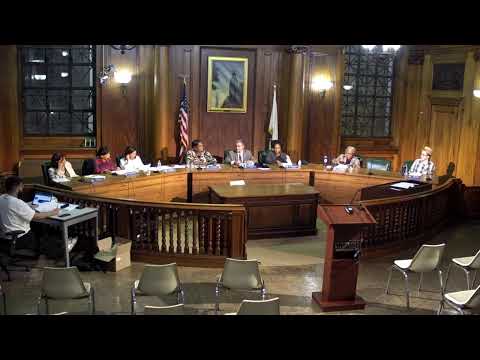
Springfield — A presentation to the Springfield School Committee on March 23 highlighted persistent gaps in postsecondary completion and outlined steps the district is taking to boost college enrollment and completion, including targeted FAFSA help and expanded early-college efforts.
Dr. Yolanda Johnson and the district postsecondary-success team presented data showing that, among an illustrative cohort of 100 Springfield students, roughly 10 ultimately complete a bachelor’s degree within six years. The presentation used federal sources and research tools to compare median incomes by educational attainment and underscored that many families with only a high-school diploma do not meet local basic-cost benchmarks.
Shannon Collins noted postgraduation attrition: many students who say they plan to enroll in college in the spring of their senior year do not ultimately enroll that fall. “Of the 368 students who planned to attend a four-year college, 62 did not enroll,” she said; similar gaps exist for two-year college plans.
The district reported improvements in FAFSA completion in recent years and said the 2025 class rebounded from prior dips; current seniors were at 53% FAFSA completion as of March 13, staff said. Eric Griffith, the postsecondary-success coordinator and a Putnam alum, highlighted equity gaps in enrollment and completion—particularly among Latino and Black male students—and described one-on-one mentorship and summer ‘summer-melt’ supports the district is using to reduce fall nonenrollment.
DESE designation and early-college expansion: Dr. Johnson said the district is pursuing a broader early-college designation from the Department of Elementary and Secondary Education (DESE) so more students across the district can earn college credits in high school. Staff said data specific to early-college students requires additional analysis and the district is scheduling interviews and next steps to scale the model.
Why it matters: The presentation connected local graduation gains to the next policy problem—improving postsecondary enrollment, persistence and completion so graduates convert diplomas into sustainable family incomes.
Next steps: The postsecondary-success leadership team will continue one-on-one follow-up with students identified as at-risk of not matriculating, expand summer supports to prevent 'summer melt,' and pursue district-level early-college approval through DESE.