Get Full Government Meeting Transcripts, Videos, & Alerts Forever!
Get email alerts on the Pensions Calpers Paydown topic
No spam. Unsubscribe anytime.
Compton workshop weighs using reserves to pay down CalPERS unfunded pension liability; staff says levy could fall about 20%
Summary
At a May workshop, a city consultant laid out scenarios to pay down roughly $75 million of the miscellaneous CalPERS unfunded liability from reserves; staff said that prepaying could save an estimated $42.7 million in interest and reduce the annual pension levy by about $7.2 million (roughly 20%), while residents urged further analysis and no payment decision was made.
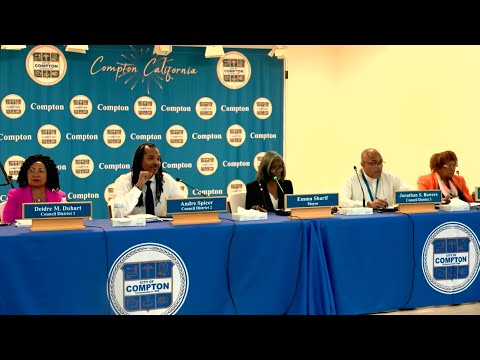
Compton City Council members heard a presentation at a workshop about using reserve funds to pay down the city's CalPERS unfunded pension liability but did not vote to make any payment.
Dan Matu Chevich, a consultant engaged to model the liability, told the council that CalPERS sends a supplemental bill when actuarial assumptions and investment returns fall short, and that the system's assumed return (6.8%) is what makes those supplemental amounts grow. "In total, the unfunded component that CalPERS is sending you an extra bill for is $152 million," Chevich said, describing scenarios in which paying down principal now reduces long-term interest costs.
Staff outlined a targeted approach focused on the miscellaneous plan, noting a principal figure of about $75.6 million and a staff scenario of paying roughly 90% of that balance. Under the staff scenario, Chevich said prepaying about $65 million to $68 million (depending on timing) would yield roughly $42.7 million in interest savings and reduce the annual pension levy paid to CalPERS by an estimated $7.2 million. The staff presentation contrasted those projected savings with the alternative of making only required annual payments, which the consultant said could total about $230 million over time.
City staff and the consultant emphasized trade-offs: placing money into a pension trust can earn returns more aligned with CalPERS assumptions than the city's allowable short-term investments under Government Code section 53601, but the council would also want to retain some liquidity to manage market volatility and ongoing service obligations. The presentation cited peer practices, including a municipal trust balance discussed as about $110 million in another city example.
Council members pressed staff on practical effects for residents. One council member asked whether the proposal would lower property-tax bills; staff said a reduction in the pension levy would only translate into lower property-tax assessments if the council and staff reduce the levy when it is prepared, and that an earlier estimate suggested an average taxpayer reduction of about $200 in the first year of such a change.
Public commenters urged caution. Charles Davis, a former city clerk, said the council should not approve any resolution yet and asked for further, deeper analysis of all components of the retirement fund and the potential impacts: "Madame mayor and city council, I beg you, do not approve this resolution. Have another workshop, but take into consideration all the components, all the variables," he said. Other residents questioned why local taxpayers fund retirement benefits for some recipients and urged verification that only former city employees receive city-paid retiree benefits. Audience members also raised an unrelated concern about trash charges appearing on property-tax bills and asked the council to address that issue separately.
Council members asked staff to verify the city's retiree roster and to confirm current treasury balances; staff said they were checking the fund balance and expected to report back. Council members also discussed that pension reform enacted for hires after about 2012 requires employee contributions for newer employees, while legacy hires may pay less or nothing toward their pensions.
No formal motion was taken to pay down CalPERS at the workshop. The council moved and seconded to close the workshop and join the regular meeting; the roll-call vote to end the workshop was unanimous.
The next procedural steps the council identified were: staff verification of current treasury balances, a review of the retiree roster to confirm beneficiaries, and the possibility of scheduling further workshops or returning with a formal recommendation that would require council action to apply reserve funds and to adjust the levy when prepared.