Get Full Government Meeting Transcripts, Videos, & Alerts Forever!
Get email alerts on the Tax Increment Financing topic
No spam. Unsubscribe anytime.
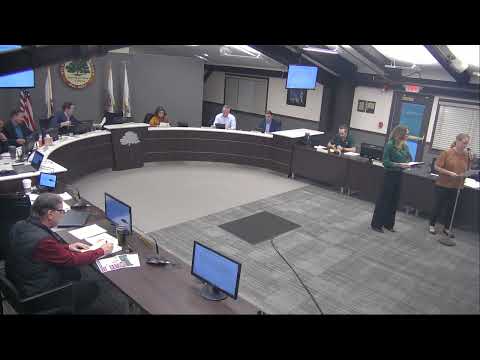
Homer Glen trustees hear detailed primer on tax-increment financing and how it might fund redevelopment
Summary
At a workshop presentation, a consultant explained how Illinois TIF districts work, eligibility criteria, financing mechanisms including pay-as-you-go reimbursements and bonds, and urged the village to wait for concrete development interest before creating a district.
A consultant from Klein Thorpe & Jenkins gave Homer Glen trustees a step-by-step briefing on tax-increment financing (TIF) and how the tool could be used to finance redevelopment and public infrastructure.
The presenter, Michael (Klein Thorpe & Jenkins), described TIF as "a financing tool for municipalities to leverage public and private investment in designated areas that qualify for economic incentives under this act," and explained the basic mechanics: the municipality freezes baseline taxable value, then captures only the incremental property-tax revenue produced by new private investment to reimburse eligible redevelopment costs, such as site remediation, demolition, public infrastructure and certain professional fees.
Why it matters: the board heard that a TIF can move marginal or blighted parcels to productive reuse and that typical TIF life spans and rules carry trade-offs. The presenter noted Illinois law typically establishes a 23-year initial TIF period and highlighted a seven-year "shot clock" requiring either a redevelopment agreement or public expenditure early in a district's life to keep the TIF active. He added that TIF is often done on a "pay-as-you-go" basis — reimbursing developers from increment as it is realized — rather than issuing debt up front.
Trustees asked how TIF interacts with annexation and existing taxing districts, costs to form a district, and whether utilities and stormwater could be paid with TIF proceeds. The presenter said eligibility is based on statutory criteria (visual blight, obsolescence, inadequate infrastructure, underperforming EAV or other factors) and said stormwater and water/sewer work are common eligible public improvements, though other funding (state loan programs) can also be more efficient for some components.
Trustees also discussed timing and risk. The consultant warned against creating a district until a viable project or developer interest exists because the 23-year clock begins at formation; communities that form a TIF without near-term projects risk having to terminate or extend the district later. He estimated initial consultant and attorney fees to create a TIF typically run in the tens of thousands (example range cited: roughly $25,000–$60,000), costs that are eligible for reimbursement from TIF increment if the district ultimately generates revenue.
What’s next: the presentation ended with recommended next steps — policy alignment, selection of a TIF consultant to prepare an eligibility report and redevelopment plan, and developing internal procedures for evaluating redevelopment agreements. Trustees signaled interest in pursuing due diligence if a concrete redevelopment opportunity arises.
Representative quote: "The goal is to take basically a dollar amount, freeze your tax revenue for a parcel at a snapshot in time, and use the increment to further redevelopment," the consultant said, describing how increments are pooled and spent.