Get Full Government Meeting Transcripts, Videos, & Alerts Forever!
Get email alerts on the Housing Density Bonus topic
No spam. Unsubscribe anytime.
Planning Commission backs ordinance to adopt state density‑bonus rules, sends recommendation to council
Summary
The Los Altos Hills Planning Commission unanimously recommended that the City Council adopt an ordinance to implement California's density bonus law, citing the housing element deadline and the need to incorporate state changes. Commissioners pressed staff on enforcement, donated‑land rules and unit‑counting for small projects.
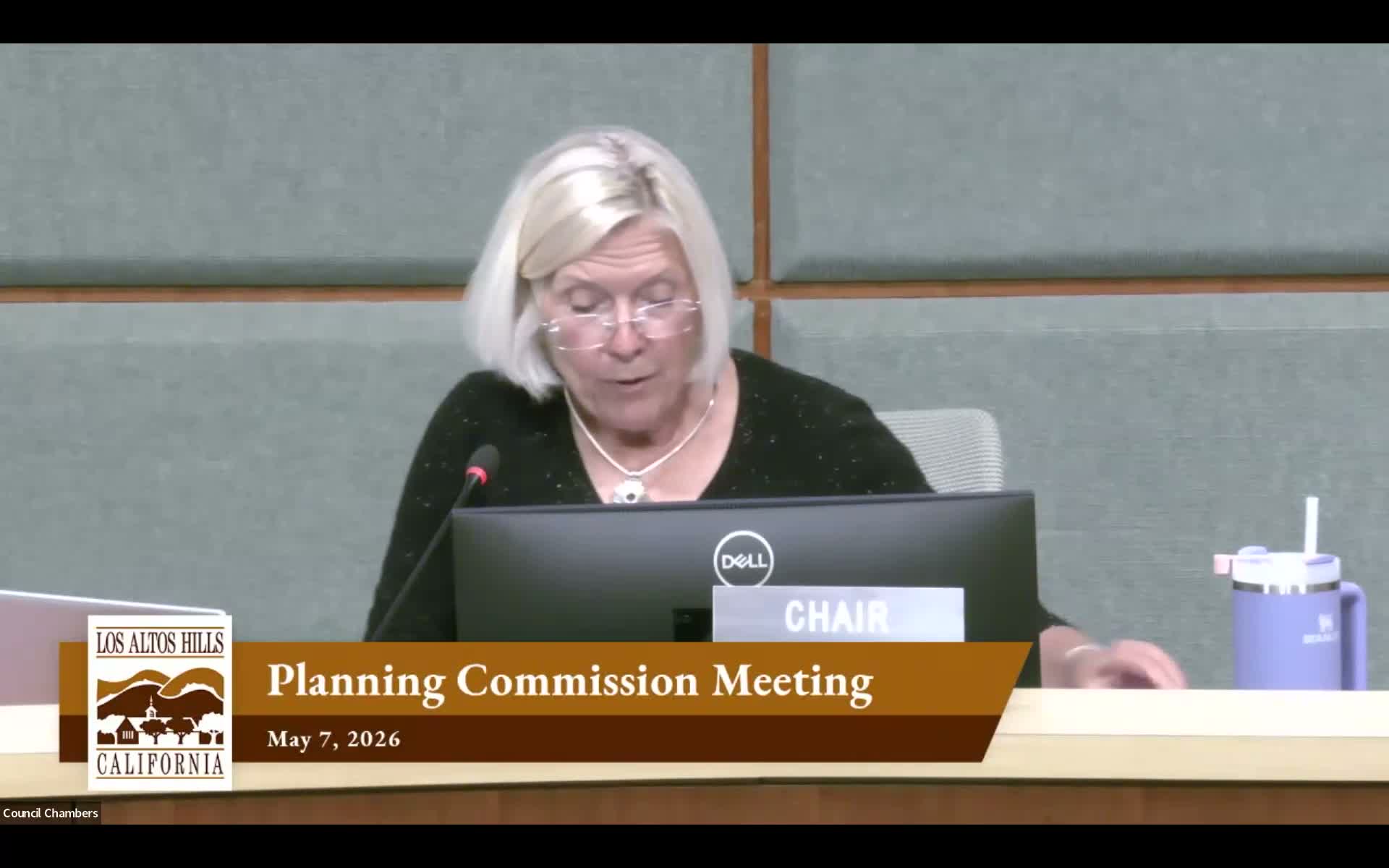
The Los Altos Hills Planning Commission voted unanimously May 5 to recommend that the City Council adopt an ordinance updating the municipal code to implement California's density bonus law.
Assistant City Attorney Claire Lai told commissioners the ordinance adopts state law by reference and is intended to comply with housing element Program B3. "The big picture is that the housing element has a program that says the town needs to update the municipal code to incorporate the state density bonus laws," Lai said, describing the statute’s framework for awarding extra units, waivers and concessions.
Why it matters: adopting an ordinance preserves the town's ability to process density bonus requests under state timelines and avoids reworking the local code every time the Legislature updates the law. The state statutes the staff cited include the density bonus provisions codified in Government Code sections 65915–65918; staff said the ordinance mostly refers to state law so local updates are not required every session.
What the ordinance does: Lai summarized that eligible projects may receive additional units above local base density and may request waivers of development standards and concessions (cost‑saving measures), along with reduced parking ratios. She said bonus eligibility commonly flows from setting aside affordable units at statutory income tiers and noted some project types are specifically eligible (for example, residential care facilities for the elderly and supportive housing). Lai said developers must dedicate the affordable units by recorded agreement and that deed‑restriction durations are typically limited ("ownership for 45 years, and rental for 55 years," she said).
Commissioner concerns and clarifications: Commissioners pressed staff on several implementation questions. They asked how donated land counts toward bonus eligibility, whether accessory dwelling units or SB 9 subdivisions can be aggregated to reach the five‑unit threshold the statute references, and whether local waivers could be denied on public‑safety grounds. Lai said waivers relate to construction standards (for example, setbacks that would physically preclude a proposed design) while concessions relate to cost reductions; both are subject to strict statutory findings before a city can deny them. On donated land, staff described an existing pathway that requires an entitled parcel sized to accommodate a minimum number of units (staff cited examples such as roughly 1.8 acres to accommodate 40 units, depending on zoning) and said donated land must be buildable and appropriately zoned.
Public input: Online commenter John O'Connell urged thorough scrutiny of applications and said density bonus rules can apply to subdivisions when the parcels and bonus parcels are deed restricted. "Density bonus does apply to subdivisions but would require the subdivisions to be deed restricted," O'Connell said, urging staff to review claims carefully.
Action taken: After discussion and questions, Commissioner X moved and the commission seconded a resolution recommending that the City Council adopt the ordinance implementing state density bonus law; the commission approved the recommendation on a roll call vote, with all members voting yes.
Next steps: Staff said the Planning Commission's recommendation will go to City Council for action in June; staff also noted that noncompliance with state law can expose the town to legal challenge under the Housing Accountability Act, so thorough review and adequate enforcement mechanisms will be necessary. The ordinance discussion flagged monitoring and enforcement as an implementation issue that will require staff time and possibly additional resources.
The Planning Commission adjourned the discussion after scheduling and other agenda items; the council will receive the commission's recommendation at its next eligible meeting.