Get Full Government Meeting Transcripts, Videos, & Alerts Forever!
Get email alerts on the Monetary Policy topic
No spam. Unsubscribe anytime.
FOMC holds rates steady, cites uncertainty from Middle East oil shock
Summary
The Federal Open Market Committee kept its target federal funds rate at 3.5%–3.75%, saying the stance remains appropriate while officials monitor tariff-driven goods inflation and uncertain oil-price effects from the Middle East. Chair Powell highlighted weak job gains and stressed decisions will be data-dependent.
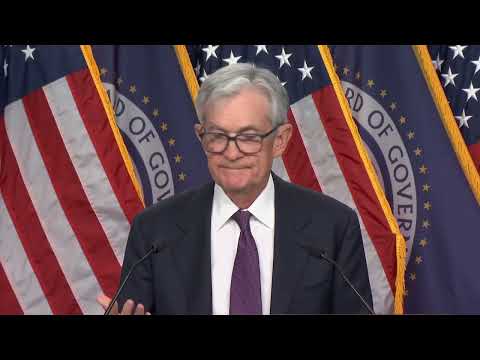
The Federal Open Market Committee on Thursday kept its target federal funds rate at 3.5%–3.75%, saying the current stance of policy is appropriate to support progress toward maximum employment and its 2% inflation objective. “Today, the FOMC decided to leave our policy rate unchanged,” Chair Powell told reporters after a prepared statement and an economists’ summary of projections.
Officials said economic activity has been expanding at a solid pace, with consumer spending resilient and business investment continuing to grow, while the housing sector remains weak. Powell noted that total personal consumption expenditures (PCE) inflation rose 2.8% over the 12 months ending in February and that core PCE (excluding food and energy) rose 3.0%, and he attributed much of the elevated reading to goods-sector inflation amplified by tariffs.
The committee’s median projection in the Summary of Economic Projections shows somewhat stronger growth than in December and projects the unemployment rate at about 4.4% at year-end. Powell emphasized that the SEP reflects 19 individual participants’ assessments and that these projections are subject to uncertainty and are not committee commitments.
A central focus of the press conference was the potential economic fallout from supply disruptions in the Middle East. Reporters pressed whether the Fed should “look through” the inflationary effect of higher oil prices; Powell said that looking through energy shocks depends on whether goods inflation eases (for example, as the one‑time effects of tariffs work their way out of the system) and on longer‑term inflation expectations remaining anchored. “The question of looking through when it does arise will be one to approach not lightly,” he said.
Powell repeatedly underscored the uncertainty around oil‑price effects, saying committee members have written down a range of individual forecasts without strong conviction and that further action will depend on incoming data and the evolving balance of risks. He noted that near‑term inflation expectations have risen recently, likely reflecting the oil‑price spike, but that most longer‑term measures remain consistent with the 2% goal.
On the labor market, Powell said the unemployment rate was 4.4% in February and has changed little since late last summer, while job gains have been low. Several participants expressed concern about the very low level of job creation. Powell also pointed to factors that have reduced labor‑force growth, including lower immigration and participation.
Asked about governance questions, Powell said he would serve as chair pro tem if a successor were not confirmed by the end of his term and that he does not intend to leave the Board while an ongoing investigation is unresolved; he referred reporters to the Fed’s public statement for further detail.
Looking ahead, Powell said monetary policy is not on a preset course and the committee will decide meeting by meeting. The Fed will watch tariff pass‑through, oil‑price developments, and labor‑market indicators in the roughly six weeks before its next meeting.
The FOMC statement and the press conference make clear the committee is maintaining its current policy stance while reserving the right to respond to material shifts in inflation or employment trends.