Get Full Government Meeting Transcripts, Videos, & Alerts Forever!
Get email alerts on the Pfas Litigation topic
No spam. Unsubscribe anytime.
Marathon County reviews joining national PFAS lawsuit as officials weigh tests, costs and protections
Summary
County attorneys told the Marathon County Board that the nationwide PFAS MDL produced a major water-provider settlement and that soil/airport/landfill claims remain possible; counsel urged targeted testing and explained contingency-fee litigation and how a county could join or preserve claims.
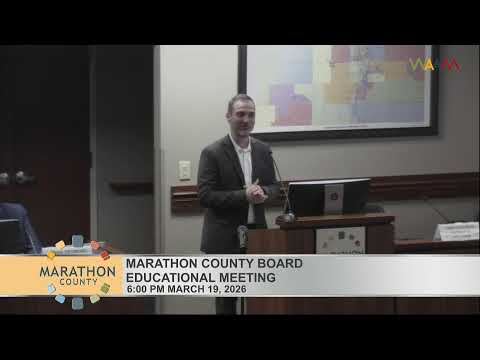
Marathon County leaders on Thursday heard from outside counsel about the opportunity to join multi-district litigation over PFAS (per- and polyfluoroalkyl substances) contamination and what that would mean for local landfills, the county airport and wastewater operations.
The county’s administrator introduced Atollis Law and national plaintiffs’ counsel to brief the board on the litigation’s history and options. Carrie McDougall, part of the national plaintiffs’ team, said the federal MDL consolidated thousands of PFAS cases and produced a large water-provider settlement: ‘‘3M paid the bulk of it and it was roughly . . . 12 to 13 billion,’’ she said, adding DuPont’s contribution was in the low‑single-digit billions.
Why it matters: The water-provider settlement resolved claims tied to drinking water but, according to counsel, specifically left open other categories of claims — including airport firefighting-foam exposures, soils, landfill and wastewater/biosolids — that counties such as Marathon could pursue. That distinction matters because a county facing costs for reverse-osmosis treatment, landfill monitoring or specialized disposal may be able to recover from manufacturers rather than relying on local taxpayers.
County options and next steps. Counsel outlined a common sequence: 1) conduct targeted preliminary testing of soils, groundwater and biosolids at sites of concern (airport, landfill, wastewater treatment and known fire‑training areas); 2) use those results to build a damage model that ties remedy costs to measured contamination; and 3) decide whether to file a claim now, participate in the MDL’s soil/airport bellwether process when it advances, or preserve rights while pursuing other remedies. Evan Claditus (Atollis/WCA) and Carrie McDougall emphasized that testing and expert modeling are critical to quantify damages and to prioritize claims.
Counsel’s terms and risks. Attorneys described the typical contingency-fee structure they use for large environmental cases: the firm advances experts and litigation costs, and is paid a percentage only if the county recovers. ‘‘We fund all of that. Now, if there is a recovery at some point, then that contingent fee provision would kick in,’’ McDougall said. Counsel cautioned there are no guarantees a suit will fully restore every expense, but argued participation in the MDL process generally provides the best path to recover significant remediation costs.
Board questions and local facts. Supervisors asked specifically about Marathon County exposures: the airport director reported no known contamination at the airport to date, and administrators said prior firefighting‑foam transitions had been handled without detected PFAS releases. Counsel recommended the county proceed with measured sampling rather than broad, unfocused testing and said there is no minimum contaminant level required to assert a soil claim in this context; even low detections can form the basis of litigation. The state’s recently adopted laboratory guidance lowering the screening standard to four parts per trillion was noted as making contamination easier to detect.
Procedural note. Administration reminded the board that a resolution to consider legal engagement is on the agenda for potential action next week; counsel recommended supervisors review the preliminary questions and testing options before deciding whether to proceed.
What happens next: Counsel urged the county to authorize limited due diligence testing and, if results indicate actionable contamination, to preserve claims and consider joining litigation or filing a suit tailored to Marathon County’s damages. ‘‘It’s better to participate and get the maximum recovery from these chemical companies as opposed to nothing,’’ McDougall said.
(Reporting based on a presentation to the Marathon County Board of Supervisors by county administration and counsel on March 19, 2026.)