Get Full Government Meeting Transcripts, Videos, & Alerts Forever!
Get email alerts on the Staffing Cuts topic
No spam. Unsubscribe anytime.
Committee presses State Department on last year's reductions, internships and a proposed diplomatic reserve corps
Summary
Members demanded data on reductions in force, whether laid‑off staff can re‑compete for roles, progress on statutorily required paid internships, and discussed the idea of a diplomatic reserve corps; Under Secretary Evans promised followups but gave limited commitments on rehiring or re‑competition.
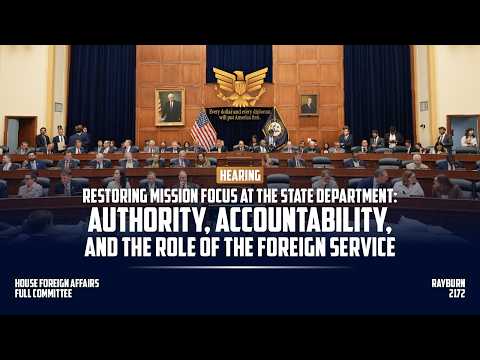
Multiple members used the hearing to press the State Department on workforce reductions made last year, the status of employees placed on administrative leave, and statutory obligations such as paid internships.
Representative Barra asked whether the department would share information on how RIF decisions were made and whether the cuts were merit‑based; Evans said he would provide the requested information. Several members cited figures they said were reported privately or in union materials (roughly 1,350 employees let go and 240–260 foreign service officers among them) and expressed concern that mission‑critical language and regional expertise had been lost.
On internships, Representative Castro noted statutory requirements for paid internships and said the department's own reporting showed high need; Evans said the internship program is being restarted and that interns are being onboarded. On passport offices, Castro asked about San Antonio; Evans said site selection is underway and committed to the office in principle.
A recurring request was whether staff on administrative leave after the RIFs would be permitted to bid for open positions. Evans declined to commit to allowing those 240 officers to compete immediately and said the dispositions remain part of an ongoing internal process. Representative Titus and others urged the department to create surge capacity and backed a diplomatic reserve corps; Evans called the reserve corps idea "interesting" and said the department would work with members on it.
Why it matters: Members argued that decisions to eliminate positions without transparent re‑employment pathways waste taxpayer investment in training and clearances and risk long‑term loss of institutional knowledge. The committee asked for timely data on rehiring, administrative leave statuses, fellowship placements and other metrics.
Next steps: The department agreed to provide requested information and timelines; members signaled intent to press for statutory compliance on internships and to explore legislation such as a diplomatic reserve corps.