Get Full Government Meeting Transcripts, Videos, & Alerts Forever!
Get email alerts on the State Department Reorg topic
No spam. Unsubscribe anytime.
House Foreign Affairs chair presses State Department on reorganization, rising nuclear threats and introduces hybrid‑warfare and biodefense bills
Summary
The committee’s chair outlined a State Department realignment that formed a new Bureau of Arms Control and Non‑Proliferation, warned about expanding Russian and Chinese nuclear capabilities, and said they introduced a 'Shadow Act' to coordinate hybrid‑warfare response and a Biodefense Diplomacy Enhancement Act ahead of a markup.
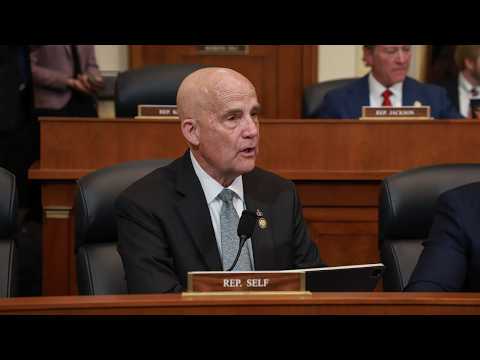
The House Committee on Foreign Affairs opened a hearing on U.S. international security and arms control where the committee’s chair outlined a recent State Department reorganization, warned of accelerating nuclear and gray‑zone threats, and announced two bills set for committee markup.
The chair said Secretary Rubio’s reorganization merged the Bureau of International Security and Non‑Proliferation with the Bureau of Arms Control, Deterrence and Stability to form the Bureau of Arms Control and Non‑Proliferation (ACN), bringing treaty negotiation and treaty‑verification teams together. The chair argued the realignment, which also places Political‑Military Affairs, Counterterrorism, International Narcotics and Law Enforcement Affairs, and a newly established Bureau of Emerging Threats under the under secretary, will streamline decisionmaking and speed responses to emerging threats.
“The new structure positions the under secretary to tackle these challenges,” the chair said, adding that arms control “must be verifiable, enforceable, and responsive to technological change and strategic competition.” The chair cited Under Secretary Danano’s February remarks in support of these priorities.
On strategic threats, the chair warned that Russia continues deploying advanced nuclear systems, including the RS28 Serat intercontinental ballistic missile, the Poseidon nuclear torpedo, the SSC X9 Skyfall cruise missile and the Avanguard hypersonic glide vehicle. The chair further cited a Pentagon projection that China’s nuclear arsenal could reach about 1,000 warheads by the end of the decade, up from roughly 600 in 2024, and said that for the first time in the nuclear age the United States faces two nuclear peer adversaries: Russia and China.
Referencing monitoring and verification challenges, the chair noted that Under Secretary Danano described detection of a 2020 nuclear explosion near the Lapure underground test site as a magnitude‑2.7 seismic event identified by primary seismic station 23 in the International Monitoring System network at Mukanchi, Kazakhstan. The chair said such detections underscore the need for arms control frameworks that account for modern testing and verification methods.
Beyond nuclear threats, the chair described fifth‑generation grayzone warfare—airspace violations, weaponized migration, infrastructure sabotage, and cyber intrusions—that blends military and non‑military tools and complicates the T family’s diplomatic and enforcement work.
The chair said they introduced two measures aimed at these challenges. The Strategic Hybrid Activities Defense and Operations of the West Act, described in the hearing as the “Shadow Act,” would establish the State Department’s first coordinator for hybrid warfare to improve attribution, information sharing and coordinated diplomatic responses with allies. The chair also introduced the Biodefense Diplomacy Enhancement Act to strengthen diplomatic engagement with allies and partners on biodefense, biosecurity and biotechnology.
The chair asked the department to provide overdue materials—specifically information for the Bureau of Political‑Military Affairs that was three weeks late—and requested that the Bureau of International Narcotics and Law Enforcement Affairs deliver a briefing on narcotics trafficking in Asia by the end of the month. The chair said the committee will mark up the two introduced bills tomorrow.
The hearing framed the ACN and the newly centralized reporting lines as tools to address interconnected threats spanning nuclear deterrence, terrorism, transnational crime and emerging technologies. The chair closed by thanking Under Secretary Danano for appearing and said the committee looks forward to substantive discussion about how Congress can support departmental effectiveness.
The committee scheduled a markup of the introduced bills for the following day; no votes were recorded during the portion of the hearing in this transcript.