Get Full Government Meeting Transcripts, Videos, & Alerts Forever!
Get email alerts on the County Finance topic
No spam. Unsubscribe anytime.
Candidate says commissioners should be full‑time, pledges to avoid tax hikes and to justify pay by results
Summary
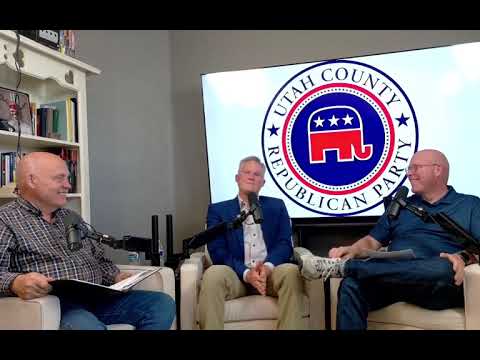
On a Utah County Republican Party podcast, Tom West Morland said he views the county commission as a full‑time job, would seek measurable returns for higher pay and staff growth, and pledged to avoid property tax increases while pursuing new revenue and efficiency.
Tom West Morland, running for Utah County Commission, described his fiscal approach in a wide-ranging discussion about commissioner salaries, staff growth, and property tax rates during a Utah County Republican Party podcast.
Asked about recent pay increases for commissioners — which hosts noted rose from about $119,000 to roughly $170,000 over five years — West Morland said he had not picked a specific salary number but emphasized that commissioners should treat the office as full‑time and deliver a measurable return to residents: "I'm going to bring more in return to the residents ... I want the residents of Utah County to think that is a heck of a deal to pay Tom whatever because we're getting way more out of it." He framed pay decisions as part of broader workforce and retention concerns, drawing parallels to public safety agencies where competitive pay helps retain skilled personnel.
On the growth of commission staff, West Morland said the right headcount depends on goals and outcomes rather than protecting positions. He favors a private‑sector, metrics‑driven approach: define what needs to be accomplished, identify efficiency gains through software and process, and hold staff accountable to clear performance measures.
When the hosts raised past property tax increases (a 67% jump in 2019 and a 48% rise in 2024), West Morland said he prefers to avoid tax hikes and stressed alternatives: economic development that creates new revenue streams and careful fiscal stewardship to reduce 'tax‑and‑spend' tendencies. In the interview he gave a qualified pledge to avoid raising property taxes and emphasized indexing or other transparent rules as options, while continuing to evaluate revenue strategies.
Why it matters: Compensation, staffing and tax policy are central county governance issues that affect budgeting priorities. West Morland framed his position around fiduciary responsibility, measurable outcomes, and economic development instead of relying solely on tax increases.
Next steps: West Morland said he would press for goal‑based budgeting, greater transparency (citizen academies and clear metrics), and pilot efforts to reduce reliance on future tax increases.