Get Full Government Meeting Transcripts, Videos, & Alerts Forever!
Get email alerts on the Public Art topic
No spam. Unsubscribe anytime.
Commission pauses mural ordinance after residents raise legal and property-rights concerns
Summary
At second reading, residents and artists praised murals’ role in downtown vibrancy but urged changes to a proposed ordinance regulating permanent exterior murals; speakers cited possible conflicts with Florida Statute 180 (2025) and commissioners asked for a community work plan and workshop rather than immediate adoption.
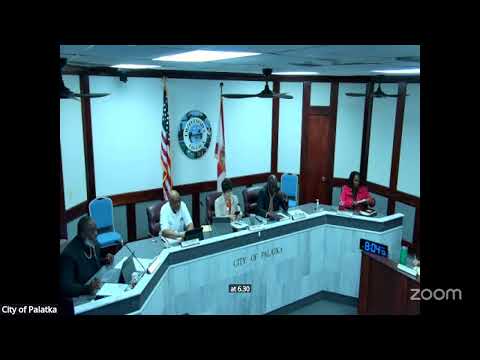
The Palatka City Commission on March 12 held a lengthy public hearing on a proposed ordinance to regulate permanent exterior murals and the role of a public arts advisory committee. The ordinance would apply to new permanent exterior murals and explicitly excludes short-term window painting for holidays or events.
Artists and downtown business owners praised murals as an economic and cultural draw. "We use the best paints... our QR codes and brochures will present a quality product that the community and visitors can enjoy and be proud of," said a Collins Mural Committee representative during public comment. Kent Huggin, who paints many storefront windows downtown as a volunteer, asked the commission to clarify that event- and holiday-related window art would not be treated as a permanent mural.
Other speakers urged caution: Shelley Shanker of the local arts alliance said an approval process that resembles an HOA review could chill creativity and burden small property owners; Rosina Eisenman said downtown window art draws visitors and customers to small businesses. Pam Garris cited Florida Senate Statute 180 (2025) and contended the proposed ordinance could not lawfully impose new restrictions that are more burdensome than state law; the commission asked staff to confirm whether that statute affects the city’s authority and to provide legal clarifications.
Commissioners repeatedly said the ordinance’s application — which the planning director described as limited to new, permanent exterior murals — and the review criteria (historic/architectural context, maintenance and safety) felt legally and administratively "squishy" and subjective. The board directed staff to pursue a community work plan and hold a focused workshop so residents, artists and the new public arts advisory committee can provide input before any final action.
Why it matters: murals are a visible expression of community identity but regulation of private-property art raises First Amendment and property-rights questions; commissioners signaled the need for clearer, legally vetted language and broader community buy-in.
What’s next: staff will review the ordinance for legal compliance (including any implications of Florida Statute 180), coordinate a workshop and develop a community-informed work plan before bringing a revised ordinance back to the commission.